Solutions Marketing Group

Providing clients with innovative strategies that position them to understand, penetrate and retain the disability market.

  • Home
  • About
  • What We Do
  • Blog
  • Learn From Us
    • Boot Camp
    • eBook
  • Contact
  • Home
  • About
  • What We Do
  • Blog
  • Learn From Us
    • Boot Camp
    • eBook
  • Contact

Real or Robot? Robotics Offer New Opportunities to People with Disabilities

October 1, 2015

By Joan Leotta

Being in two places at once is no longer an impossibility. Thanks to “telepresence” robots, people with disabilities who are confined to their homes can now travel for work or enjoyment beyond those physical limits. This exciting, new technology provides more than a virtual experience. A screen on wheels allows the individual controlling the telepresence robot to interact with people at the target destination, creating an interactive experience for everyone involved. In November 2013, Henry Evans, co-founder of Robots for Humanity, recently delivered a Ted Talk that astounded the assembled attendees. From hundreds of miles away, Evans, a mute quadriplegic who cannot leave his bed, “visited” the audience, spoke, and even powered a drone vehicle while “onstage” via a telepresence device called a Beam unit. The Ted website praised Evans as “a pioneer in adaptive robotic tech to help him, and other disabled people like him, navigate the world.” Indeed, as he personally attests, Evans has helped create a new path with this innovative technology: “I have always seen robotics as my best option. Put yourself in my shoes. I can’t move or speak. My motto is ‘if you want something, you look for options’.”

R4H Logistics

The term “telepresence” refers to a set of technologies which — via telerobotics — creates the sense and gives the appearance of an individual being present at a place other than his true location. Teleconferencing, which is its precursor, is an often used virtual meeting technology. With telepresence, however, the moveable robots produce a stronger sense of presence. With the added implementation of a Beam unit, the person visiting by robot can move about, interacting as a physical materialization with others on the job. The user’s position, actions, and voice, may be sensed, transmitted and duplicated in the remote location. Furthermore, information may travel between the user and the remote location, passing both ways.

Prior to telepresence technology, Evans depended entirely upon his computer to communicate. Even with that advancement, there were thoughts that remained trapped within his mind; his body was imprisoned within his home. Now, with his Beam, he can do more than apply his mind to work solutions. He can be there. He is proof that telepresence technology elevates the overall quality of life and workplace productivity for a person with physical limitations, no matter how severe. Using it Evans can once again enjoy the garden in his home and even tour art museums. It is a quality of life improvement beyond measure.

Johnson believes “partnerships are central to our work. Partners can be individuals, organizations, or companies with a national scope that preserve, celebrate, or educate. Two of our first partners were and still are the ADA National Network, and the Georgia Disability History Alliance. We serve as a clearinghouse by connecting and coordinating”. Johnson notes that “partnerships are like pieces of a puzzle—the more partners we have the more clearly the larger picture of rights for everyone is assembled.” An example of this is Legacy’s work with the Center for Civil & Human Rights that opened in Atlanta in 2014. Johnson has been involved with the museum from its inception. The Center has included disability rights in its core displays and in fact, from May through September of this year, is participating in the anniversary with an exhibit of disability-rights that will feature ADA milestone photos by Tom Olin.

Furthering this Technology with R4H

According to Evans, “the primary role of R4H (Robotics for Humanity) is to inspire and motivate engineers to apply their knowledge of robotics to help the disabled.” To achieve this goal, R4H has partnered with a number of organizations since its inception. Evans notes that, “Many groups have participated in one-time projects. The groups that have creatively participated in many projects over an extended period of time are:  The Healthcare Robotics Lab at Georgia Tech, led by Dr. Kemp; Willow Garage/Suitable Technologies [founded by Scott Hassan], and Savioke Technologies [founded by Steve Cousins]. Dr. Kemp and Steve Cousins co-founded R4H with me. My nephew Henry Clever has also added a lot of energy and creativity to many projects over the years.” Steve Cousins of Savioke remarked that, “Savioke (pronounced “savvy oak”) is creating autonomous robot helpers for the services industry. So I have been a sponsor of various sub products. One of these was a device known by the group as ‘scratchbot,’ a project Evans’ son helped with to allow his father, who is immobile, to scratch his nose.”

As a single-use device, the ‘scratchbot’ may not generate a widespread demand. Nonetheless, its creation has contributed to refining the effective implementation of the Beam unit and similar robotic devices. As a result, the field has expanded as other organizations with the same mission collaborate. Steve Cousins explains that Savioke has played an important role in these partnerships, making connections with “Evans and professors from different universities at “Willow Garage,” including Ted Jenkins who was at the Ted talk.”

Cousins goes on to explain that Savioke is “guided by the beacon that is R4H.” The company is “passionate” about delivering easy-to-use yet sophisticated robots that improve the lives of people in places where they live and work. By developing and deploying robotic technology in human environments, Cousins believes that over time, personal robots will help people to achieve their potential, enhancing strengths, overcoming weaknesses, and endowing new capabilities. “We are just beginning to imagine. We are inspired by people who use technology to overcome disabilities, and we believe that robots have the potential to make all of our lives better.”

Disseminating the Technology

Lowering the cost of Beam units and familiarizing the broader culture with its practical uses will be key to disseminating this new technology. Although the unit used by Evans costs more than twenty thousand dollars to produce, units with similar capability are now available for two thousand dollars. As far as public familiarity with the product concept, the popular comic strip “Baldo” features a character who uses Beam technology to great effect. Confined to her home because of a compromised immune system, Rayna, a vibrant teen, is nonetheless fully engaged in a high school experience via the use of a telepresence robot. Beam technology is readily accepted by her family, her boyfriend, in her classroom and by her peers. Though obviously fictional, Reyna’s reliance on her Beam unit models possibilities for people with disabilities and the people who support them.

Finally, widespread acceptance of the Beam necessitates precision in ergonomics: effective design plays a vital role. Both Henry Evans and Steve Cousins agree that there will be almost no training needed if the robot is properly designed. Evans recalls, “I needed only ten minutes of training to use the robotic body (the Beam) featured in the Ted talk. It is very intuitive.”

Advances Benefit Many

R4H has a spillover effect, encouraging many to participate in inventing devices that can assist people with disabilities. When a group of high school students in Australia learned that Evans was unable to interact with his dog, one student in particular, Amber. So, offered to build him a remote controlled electric dog feeder that Evans could control with his head. The Australian High School’s Robotics class allowed for the environment where such single purpose inventions can be invented and find applications beyond their intended sole use.

Spillover from robotics research aids daily life for everyone—able-bodied and those with disabilities alike. The reach of this technology is increasingly common, varied and potentially vast. Few consider that the typing aids used on cellophanes are direct descendants of the typing aids developed for people with disabilities. Savioke develops robotic solutions to help with jobs in the service industry including devices that can carry heavy items. For this reason, Evans feels that all types of disabilities, not only extreme, multiple ones can be aided by robotic solutions. “Different disabilities need different interfaces, ” he points out but all can benefit. Consider the exciting development of R4H is implementing Beam units in Disneyland so sick children in hospitals can visit anytime! People with long-term disabilities and chronic conditions will encounter a unique set of challenges as they get older. But that doesn’t mean they can’t age successfully and safely. The Georgia Tech website affirms that research in this area of robotics will aid us all as we grow older.

Cousins says, “I think one of the things that changed over the last ten years is that we have progressed from a world where robots were rare except for those in factories. Now robots are coming in and out from behind cages and more importantly, are not confined to industrial uses and research labs but starting to be made affordable. For example, in industry, ten years ago people were looking to make delivery robots only for in hospitals to carry five hundred pound loads — big lumbering thing but now we can build smaller and inexpensive lighter and smaller and it can do smaller loads, even making them affordable for smaller institutions.” In addition technology like the Beam are already available at a price that is affordable for individuals.

The Future

This is just the beginning. Henry Evans’ tragic stroke at the age of 40 rendered him voiceless and quadriplegic. Through robotic technology, Evans continues to find ways to explore and interact with the world. Devices developed by members of Robots for Humanity to date range from a laser pointer mounted on his glasses to a very expensive humanoid robot (PR2) to various flying quad rotors. Through robotic technology he speaks and brings his ideas to the world.
Filed Under: Profiles in Excellence Leave a Comment

Tags: accessibility, robotics, Robots for Humanity

find this post helpful? Try these:

Default ThumbnailAccessible Gaming: More Than Fun Axs Map LogoAXS Map: Making the Trip Easier
share

eSSENTIAL Accessibility: Making the Web Accessible for All

August 15, 2015

By Joan Leotta

Essential Accessibility LogoRather than sell accessibility improvement software on an individual basis, eSSENTIAL collaborates with firms that promote improved access features not only for visitor use on their own site, but to be downloaded and used elsewhere by those same visitors on other sites.Software that is designed both to make life easier for customers with disabilities and to make websites accessible for the same clientele is not a new idea. However, eSSENTIAL Accessibility’s new strategy for introducing such a product stands to dramatically expand a single company’s efforts to improve the experience of people with disabilities on their site and across varied disability platforms.
This approach demonstrates the company’s commitment to persons with disabilities through offering additional value to their site and then ultimately giving the product away.  In the end, eSSENTIAL anticipates that the individual benefiting from this experience will return as a satisfied and loyal customer.

Development of the Software

Simon Dermer, Managing Director of eSSENTIAL Accessiblity says, “I owned a healthcare center and got a feel for the needs of people with disabilities in a clinical setting and then in the daily life setting with assistive technology. We were working with a Swiss company that has a platform for aiding people with paralysis. We were utilizing this technology in aiding people with severe physical limits use the internet.”

Dermer observes that these products were very expensive and often complex and specialized. “Many folks don’t even know they have resources out there to help them.” So he imagined a web based solution that would go beyond helping people with visual disabilities.  By 2009 his concept began to take shape.  Dermer began placing his software onto websites serving a variety of needs, which stimulated and expanded interest and use.  Larger companies took note.

Overtime, eSSENTIAL began to reshape its marketing communication to companies. “If you want to do more than engage [a client] one time, to really reach the disability segment of the market as customers and employees and to expedite traditional regulatory concerns, then giving them access to this software will help.” Companies desiring to gain more customers with disabilities were very receptive to using the eSSENTIAL Acessiblity app™.

How Does It Work?

The eSSENTIAL Accessibility app™ provides a suite of keyboard and mouse replacement solutions, among other tools, designed to help people with physical, reading and age-related disabilities get online. The app is free of charge to the end-user and can be downloaded by clicking the blue wheelchair and keyboard symbol. One promising and determinative example of its effective implementation can be found on merck.com and merckengage.com. Once downloaded, the app can be used on any website.

What Makes This App Different?

Simon Dermer observes that “there are many great specialized accessibility solutions for those who can do the homework to find it and have a lot of money to spend on a specialized app. Our advantage is not so much in what our app accomplishes as in the way we are going about putting it into the marketplace. Its open availability is what makes us different.” eSSENTIAL calls the firms who use its app “partners” because they work together to provide a better internet experience for people with disabilities. He adds, “the elegance of our solution is that this is a social impact model that eliminates the cost barrier to the person with a disability who needs it and the app is easy to use.”

For example, on the Merck site, visitors who click on the icon are directed to a special Merck landing page. Here, they can download the app, access MerckEngage for online resources for healthy living, view job opportunities within the company, learn about Merck’s global diversity and inclusion practices and programs, and access the Merck Manual for Pet Health, which offers readers information on animal-assisted therapy and service animals for people who are differently-abled.

Partnership Experience

In September of 2014, Merck, a global healthcare leader, began its partnership with eSSENTIAL Accessibility. People who cannot browse the web using conventional methods due to conditions such as arthritis, paralysis or amputation, can use this app to browse completely hands free, using tools like motion technology and voice-activated navigation.

David L. Gonzales, Merck’s Chief Diversity Officer, announced “we are pleased to join this important coalition of organizations that are working together to empower people with different abilities by making inclusivity the norm.”

Dermer says of the partnership, “Merck has recognized, from the get-go, the importance of being a diverse and inclusive organization. From developing products that serve people with disabilities, to offering their employees with disabilities the outstanding Workplace EnABLEment program, to their community-giving efforts and their partnerships with organizations that promote thought-leadership on diversity, Merck truly sets the bar high. We are proud to have them join the coalition and we look forward to working together to help take their inclusivity efforts to the next level.”

In November of 2014, former Vice President and Chief Diversity Officer at Merck, Deborah Dagit, joined  eSSENTIAL Accessibility at the 2014 ANA Multicultural Marketing & Diversity Conference. The three day conference highlighted people with disabilities as perhaps the last hidden demographic and explored how organizations and brands are creating economic and social value by tailoring their information and offerings for people with disabilities. Drawing on her extensive experience at Merck and as a pioneer in the diversity and inclusion realm, Dagit  shared with attendees how weaving a people with disabilities message into brand experiences engages at a basic, powerful, emotional level to adapt to the changing demands of this consumer segment.

Dermer says, “it’s all about recognizing the overall buying power and importance of customers with disabilities and building loyalty by offering such programs as eSSential on their site, to be used anywhere.”

The Future

eSSENTIAL Accessibility helps organizations build loyalty with people with disabilities. Derner sees the company as “offering partners an assistive technology app that enables people with disabilities to interact with their brand online, and to execute marketing communications campaigns that support customer service, diversity and inclusion efforts. By joining a growing coalition, leading organizations from around the world are reinforcing a disability-friendly brand presence and creating sustainable business and social value by engaging and serving this overlooked market.” For more information, please visit essentialaccessibility.com.

Filed Under: Profiles in Excellence Leave a Comment

Tags: accessibilty

find this post helpful? Try these:

No related posts.

share

The Americans with Disabilities Act Celebrates 25 Years of a Brilliant Legacy, Robust Present and Promising Future

July 26, 2015

By Joan Leotta

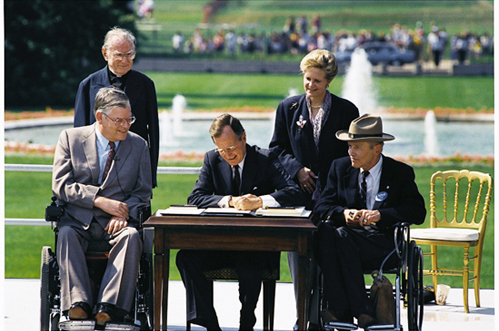
President George H. W. Bush sitting at a table signing the ADAPresident George H.W. Bush signs the ADA on July 26, 1990
The Americans with Disabilities Act (ADA) is poised to celebrate its 25 years as a signature piece of American civil rights legislation on July 26th. To ensure that the commemoration offers more than a single day of champagne moments, for the past three years the ADA Legacy Project has been busy assisting with a series of projects and events designed to preserve, celebrate and educate about ADA. The festivities will provide both moments to reflect upon the past and offer stepping stones to envision a still brighter future for people with disabilities.

According to Mark Johnson, a founder and current chair of the ADA Legacy Project and Director of Advocacy at the Shepherd Center, the Legacy Project has three distinct purposes: to create a unified, community-wide based approach to the preservation of the history of disability rights, to celebrate its milestones and to educate the public. Johnson spoke with SMG to share the Legacy project’s vision and to rally public interest in honoring the ADA’s achievements. Johnson sees the Americans with Disabilities Act’s future as strongly connected to “positive self and community identity for people with disabilities, greater community living services and supports, economic justice and a new generation trained in the process of achieving positive change in our society.”

History and Partnerships

In describing Legacy’s collaborative vision, Johnson commented that, “Many saw the coming ADA anniversary as a timely opportunity to focus on the history of the disability movement in the U.S., to raise pride among people with disabilities and engage the ADA generation, that group of individuals who acquired disability after the passage of the legislation.” He notes further that to bring such lofty goals to fruition, it was necessary to start early—and he did. “I was involved in the tenth anniversary and as this bigger one approached, I realized it was an opportunity to open a window to a call to action and accelerate the process of rights for   disabilities. I also knew a successful effort would take time to plan.”

Therefore, in 2012 with the blessing of the Shepherd Center where Johnson is employed, a small group met in that facility to set goals and begin the project. Their hope was to forge a unified approach to this process with all of its stakeholders and build an infrastructure that would remain at work well after the celebrations on July 26, 2015.  In conjunction with this vision, the role disability rights played in the civil rights movement would be an important theme of the project.  Johnson remains ever-mindful of the relationship between Legacy and the struggle. That understanding, in fact, shapes the partnerships the team has created.

Johnson believes “partnerships are central to our work. Partners can be individuals, organizations, or companies with a national scope that preserve, celebrate, or educate. Two of our first partners were and still are the ADA National Network, and the Georgia Disability History Alliance. We serve as a clearinghouse by connecting and coordinating”. Johnson notes that “partnerships are like pieces of a puzzle—the more partners we have the more clearly the larger picture of rights for everyone is assembled.” An example of this is Legacy’s work with the Center for Civil & Human Rights that opened in Atlanta in 2014. Johnson has been involved with the museum from its inception. The Center has included disability rights in its core displays and in fact, from May through September of this year, is participating in the anniversary with an exhibit of disability-rights that will feature ADA milestone photos by Tom Olin.

If you or your group wishes to partner with ADA Legacy for future projects, instructions are located on the website at http://www.adalegacy.com/get-involved/become-partner.

A Special Partnership-Generating Effort: The ADA Bus

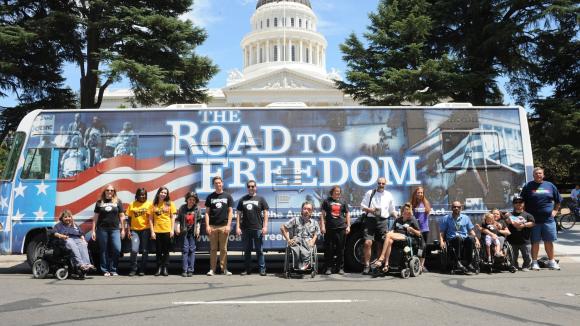
Many people, some in wheelchairs, standing in front of the ADA Legacy Bus

ADA Legacy Bus

The ADA tour features interactive exhibits designed to draw people with disabilities of all ages and cultures. Courtesy of the Museum of disABILITY History, Legacy bus visitors will first see a four-panel display on the history of self-advocacy. They may read about the ADA Legacy Project and learn more about its efforts to preserve disability history, celebrate major milestones and educate future generations of disability advocates. There is also a booth where advocates may post their thoughts and a photo, relating the difference the Americans with Disabilities Act has made in their lives. The tour bus also features the ADA quilt which is available for advocates to sign, as thousands have before them, a testimony to how many have experienced the tour and many other Legacy projects.The ADA Bus was originally procured for the 2006-2007 Road to Freedom, a tour that promoted the importance of the 2008 amendments to the Americans with Disabilities Act. Both the bus restoration and its re-wrap (new pictures and logos applied to the truck exterior) were undertaken by Andy Houghton and the U.S. Business Leadership Network. The 2014-15 California tour was launched under the leadership of Christina Mills, Deputy Director of the California Foundation for Independent Living, and Sarah Triano, Executive Officer at the California Committee for the Employment of People with Disabilities. Mills and Triano also coordinated the spirited kick-off event at the capitol building in Sacramento. Now managed by the ADA Legacy Project, the bus has partnered with many sponsors and organizations around the country to accomplish this extraordinary effort.

The bus has covered more than 21,000 miles, driving through 30 states, with stops at city halls, public gathering places, disability organizations, public schools, universities, disability conferences and Abilities Expos. The numbers of people touched at any one stop vary widely. In Greenville, South Carolina, for example, an EXPO planned by 25 local groups drew about 800 people. One of those South Carolina visitors was an occupational therapist and member of the American Occupational Therapy Association. She requested that a stop be organized at the AOTA gathering in Nashville. With the American Occupational Therapy Association’s cooperation, the Legacy tour bus parked at the conference headquarters. During that single stop, Legacy recorded over nine thousand visitors.

Funding the ADA Legacy

Keeping Legacy up and running also requires diverse collaborations. Johnson is no stranger to energetic fundraising and his convictions are clear: “When you start organic, you begin with partners. Some of them become sponsors. Our two founding sponsors were Amerigroup Foundation and Shepherd Center, my employer. However, a lot of our funding comes from individuals—small donors. Most comes through host fees and merchandise sales. There is a place on the website to purchase t-shirts and tattoos and other “swag” with the ADA Legacy logo. Other items can be customized, with a home state insignia, such as the state of Texas, which added a lone star, and Alabama which has emblazoned the whole state name on ADA shirts.

Current ADA Achievements

Since its passage in 1990, the Americans with Disabilities Act has impacted lives on every level: personally, nationally and internationally. Mark Johnson notes that this vital piece of legislation has helped change individual and group attitudes, given pride to the disability community, and created the passage way for many more policy related victories in employment rights and community living rights. Personally, he has felt its positive impact in the range of everyday conveniences that make life in our communities an equitable experience: the increase in available parking for people using mobility devices or for others who cannot manage distance and required parking; the fair hiring practices in the job market; and freedom and fairness in his decision to live wherever he chooses. The content of the Conventions on the Rights of Persons with Disabilities that most countries have signed is founded on our ADA. Above all, the Americans with Disabilities Act has and continues to provide a platform for hope for even more improvements in the future.

Expanding Legacy’s Reach Now and in the Future

When the ADA was passed 25 years ago, the primary tools of information dissemination, in addition to media contact, were postal mail and the telephone. Johnson explains that, “Now we have the web, Facebook, twitter and more” to expand the organization’s engagement with the world. Utilizing both local and national coverage through its partners, as in the recent efforts of New York City that escalated from a parade to honor a person with a disability that has escalated into a month-long celebration of achievements of persons with disabilities. Such efforts have helped circulate the ADA message throughout newer media outlets. Today, instead of the telephone, there are new tools –twitter’s hashtag, and facebook for example.”Legacy plans to develop a tweet campaign in the weeks just prior to the anniversary date of July 26. If you use the internet, be sure to check out their site and “like” it –https://www.facebook.com/adalegacy..

As this article is being written, Legacy is working to make its website available in a more mobile-friendly format for phones and pad devices. Johnson shares that the organization is “working with Google’s Cultural Institute on an initiative to make the content of brick and mortar museums mobile.”

The Future

Creating a generation of new advocates means communicating through media these young people prefer.  Mark Johnson understands this: “Young people in particular are users of these newer media. However, it is not only the media we are transforming, we are also retooling the message, developing new strategies. The young are eager to want to know not war stories of past victories (although that is important to archive) but also the why of how things came to be what they are today and then how they can effect change in the future.” After the July 26 launch, plans are already in place for the Disability Rights Center to manage the Road to Freedom Tour and for USBLN to manage the Disability Rights Museum on Wheels.  However, the ADA Legacy Project will still play a role. The full scope of that role will depend on their budget, but Johnson anticipates continuing at least as an advisor, convener and facilitator as well as the manager of other projects such as archiving ADA25 and The ADA Legacy Tour, finding  a home for NCCHR’s ADA25 photos exhibit, and continuing to coordinate with the University of Georgia and the Georgia Disability History Alliance. In addition, the group will continue to promote its core mission of preservation, celebration, and education, market and sell disability pride products, and work to develop a disability advisory committee for NCCHR, similar to their women’s group.

Mark Johnson is looking for continued advancement in the areas of economic justice for all, more use of universal design, and the changing of perceptions of disability from a negative to positive, both within and outside the community. He says, “It’s pretty hard to move forward when someone sees you as something less. The future of the movement hinges on normalizing disability—a natural disability of living long and interacting with the environment instead of negative. I am inspired by Laura Hershey a severely disable poet, and early leader in the movement. Individual battles have been won, the ADA has earned and deserves the celebration of its silver achievements, but we need to continue to work so that in the next twenty-five years, achievements will continue and with respect to justice, perception and design, they will be pure gold.”

Note: The Hershey poem can be found here: http://disabilityvisibilityproject.com/2014/12/01/poem-by-laura-hershey-you-get-proud-by-practicing/.

Article edited by Kim Slaughter White.

Filed Under: Profiles in Excellence Leave a Comment

Tags: ADA, americans with disabilities act

find this post helpful? Try these:

Default ThumbnailSMG Tip: Celebrate the 25th Anniversary of the Americans with Disabilities Act White House ADA CelebrationHappy 26th Anniversary of the Americans with Disabilities Act
share

Comcast says, “Open Sesame!”

April 13, 2015

By Joan Leotta

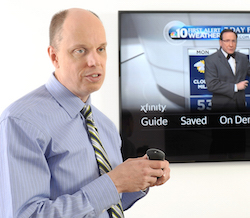
Photo of Tom Wlodkowski

Tom Wlodkowski, Comcast Vice President of Accessibility

Almost 200 years ago, Braille opened up the world of written communication to people who cannot see. Now, Comcast has developed a solution that allows blind people to enjoy all of the action, not just the dialogue, in any program on television. The new feature also allows users to hear descriptions of menu options usually only presented as text on the screen. Just as Braille opened up the universe of written stories, Comcast Xfinity’s X1 service unlocks the world of television entertainment in new ways for people with visual disabilities.

Tom Wlodkowski, Comcast’s VP of Accessibility, knows that technological advances have the power to help people with disabilities be full participants in all activities of everyday living.  “As someone who was born blind, I always thought of technology as a great equalizer,” he explains. “And when I joined Comcast to focus on product accessibility, I was excited to explore how our services could open new doors to independence. I’ve been here close to three years now and I feel like we’ve made progress on a number of fronts. But watching this effort come to fruition, and hearing how people are reacting, really leaves me speechless.”

In a recent Comcast press release, customer and product beta tester Amy Ruell echoed these sentiments. “TV is such an important and integral part of the fabric of our culture,” she believes, “that to be excluded from that experience in any way makes it more difficult for blind people to participate fully in society.”

How It Works

Comcast’s revolutionary X1 service is the first to provide voice guidance through the ever-more-complex menus involved in TV viewing and recording. All Xfinity X1 customers across the country can activate the talking guide on their existing boxes by tapping the “A” button twice on their remote controls. The feature can also be turned on via the Accessibility Settings within the main menu.

“The talking guide speaks what’s on the screen as the viewer navigates the Guide, Saved, On Demand, and Settings sections of X1,” Wlodkowski explains. In addition to vocally communicating menu items, the service relays information such as individual program descriptions and ratings from Common Sense Media and Rotten Tomatoes to help viewers decide what programming they might enjoy. “Future versions of the feature will include functionality within the Search section and additional personalization settings like rate of speech,” Wlodkowski continues.
A video previewing the new service is now available at the Comcast website.

Development of the Talking Guide

Wlodkowski notes that “about 19 million U.S. households have at least one member with a disability and, according to the U.S. Census, there are 8.1 million people with a visual disability.” These numbers reveal not only buyer potential but, more significantly, a segment of the US population who are often not able to join in the national conversation that is TV viewing.

A few years ago, Comcast set out to solve that problem at one of its Lab Weeks: employee-led innovation workshops. As Wlodkowski reports, “In the fall of 2012, a team of developers got together in Philadelphia and brainstormed a new X1 feature for an upcoming Lab Week centered on the theme of accessibility. They called it Text to Speech and, inspired by the notion that there should be more than one way for customers to interact with their TV interface and discover what’s on, the idea set the stage for what would become the industry’s first voice-enabled television user interface. Around the same time that year, I took the helm as the Vice President of Accessibility for Comcast to focus on the usability of our products and services by people with disabilities.”

Emily

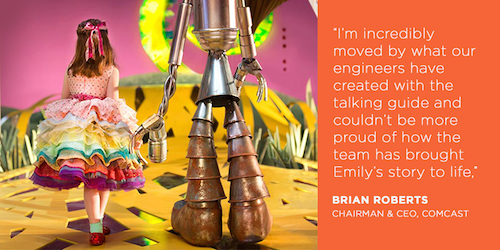
Recognizing the value such a service could provide to potential television audiences, Comcast chose to highlight the talking guide through a commercial that aired during the Oscars. The ad featured a seven-year-old girl named Emily who has been blind since birth. Through the ad, viewers can experience what Emily “sees” when she enjoys her favorite movie, The Wizard of Oz. They also are exposed to the reality that people who cannot see also want access to the infinite stories available through TV.

Wlodkowski relates, “We’re hoping to spark an even bigger conversation about how people with disabilities enjoy entertainment through a national campaign called Emily’s Oz.” Taking Emily’s impressions of the classic film, a documentary crew has recreated the story and characters as Emily envisions them. “But the cool part,” Wlodkowski emphasizes, “is how we bring her vision to life in a way she’s never experienced before. It’s an adorable and inspiring outcome — not because Emily happens to be blind, but rather because she is an independent, imaginative and charming young girl whose creative mind is infectious.”

Using the time during the Oscars to introduce the talking guide service not only helped spark awareness of the entertainment possibilities for blind people. It also increased the determination to do more on the part of Comcast’s staff. Wlodkowski asserts, “The work that went into telling Emily’s story has really galvanized my team and encouraged us all to pursue even bolder things.”

Image of Emily with the Tin Man along with a quote: I'm incredibly moved by what our engineers have created with the talking guide and couldn't be more proud of how the team brought Emily's story to life. -  Brian Roberts, Chairman & CEO of Comcast

Comcast’s Commitment to Accessibility

The voice guidance system is just the latest in a series of innovations created in the Comcast Accessibility Lab. “From expanding the number of On-Demand movies and shows that include video description to helping those with a disability navigate their smart home and the Internet of Things, we’re still just scratching the surface of what’s possible in the accessibility space,” Wlodkowski reports. Check out the full range of current and future accessible produce from Comast: Leveling the Playing Field with Products for Everyone.

“The talking guide is as much about usability as it is about accessibility,” he continues. “We think about accessibility from the design of a product all the way through production, and this feature is the result of years of work by our team, including customer research, focus groups and industry partnerships. For people like me who are blind, this new interface opens up a whole new world of options for watching TV.”

Comcast has long been active in providing solutions that make it more enjoyable for people with a variety of disabilities to enjoy broadcast entertainment. In addition to voice guidance and one-touch access to closed captioning, Comcast has created an online help and support resource for Xfinity customers looking for information about accessibility-related topics. The webpage includes an overview of accessibility products and services, support for third-party assistive devices, information related to Braille or large-print bills and the ability to connect with accessibility support specialists.

The company has a service center specifically dedicated to customers with disabilities. Comcast’s Accessibility Center of Excellence, based in Pensacola, Florida, houses a team of specially-trained agents who handle about 10,000 calls each month.

Comcast plans to collaborate with service organizations and nonprofits to create awareness in the disability community, not only to promote the voice guidance system but also to highlight other accessibility features that offer more inclusive entertainment experiences. “Comcast’s commitment to accessibility is encouraging,” beta tester Ruell contends, “because it means there will be tremendous progress in developing technology that is universally accessible.”

Article edited by Mary-Louise Piner.

Filed Under: Profiles in Excellence Leave a Comment

Tags: accessibility, Comcast

find this post helpful? Try these:

Default ThumbnailAccessible Gaming: More Than Fun Uber AppNeed a Ride?
share

Just Say It!

March 1, 2015

By Joan Leotta

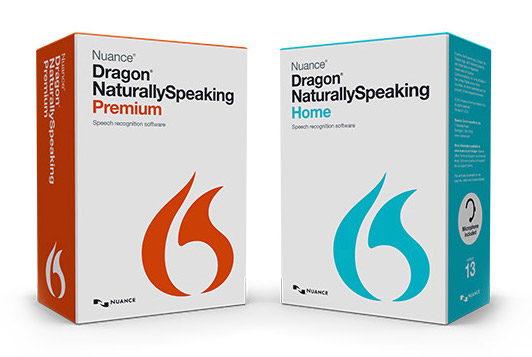
Photo of Dragon Naturally Speaking software packingIn the spring of 2014, Shirley Connolly, writer, editor and Christian romance author, was facing the end of her twenty-year writing career.  “The problems I had been having with my wrists and fingers, especially my thumbs, had begun to increase to where I was finding it difficult to work comfortably on my computer. As a published author, teacher and speaker, I was in a dilemma. My neurologist performed a conductive test which showed I had both chronic tendinitis in my fingers and debilitating thumb arthritis.” After learning of the potential impact on Connolly’s writing career, her Koinonia Community fellowship lifted her in prayer.  Adding works to their faith, the group purchased Dragon NaturallySpeaking 12 Professional for Connolly.

Rather than traditional keyboard stroking, Dragon 12 provides an alternative, allowing Connolly to speak her thoughts.  “I’ve been using Dragon now for several months and appreciate how it quickly recognized my voice after just a couple of weeks.” Connolly uses the software for both writing and editing and has found that it functions effectively even with potentially distracting background noise.

Not only did Dragon NaturallySpeaking restore Connolly’s ability to write with ease, but it also inspired new writing projects.  “I was able to be a copy editor for my critique group of six writers. Editing is trickier but definitely works.”  Just as exciting, Connolly has begun a blog, A Pen for Your Thoughts, which traces her triumphs over the debilitating effects of arthritis.  In a separate blog, Welcome, to My Parlor, she authors devotionals and bible studies. She also found the time to work up the fourth book in her Decisions series, Not Quite an Angel, an 80,000-word book.

Even more dramatic is the story of Travis Roy, whose hockey accident eighteen years ago left him paralyzed. He credits Dragon software with saving his life intellectually and making it possible for him to earn a living. Using Dragon to write his papers, he graduated from Boston University and went on to found the Travis Roy Foundation which to date has raised over $5 million to help other people with spinal cord injuries. He says, “Dragon is one of the most critical resources I have that enables me to live a full and productive life.”

Through his foundation, Roy also helps other spinal cord injury survivors secure employment. “We provide these applicants with computers equipped with Dragon NaturallySpeaking. It not only stimulates their minds, but they can also virtually leave their room and explore the world. You just can’t put a price tag on what that does for someone.”

History of Nuance

Nuance, the maker of Dragon NaturallySpeaking and Dragon Dictate for Mac, was incorporated as Visioneer, Inc. in March 1992. Through December 1998, the company developed and sold scanner hardware and software products. On January 6, 1999, Visioneer sold the hardware business and the Visioneer brand name to Primax Electronics, Ltd.On March 2, 1999, Visioneer acquired ScanSoft, in a cash election merger, from Xerox Corporation. The corporate entity “Visioneer” survived the merger, but changed its name to “ScanSoft, Inc.” On October 18, 2005, the company changed the name to “Nuance Communications, Inc.” The Dragon line of software for speech recognition originally came to market in the late 1980’s, and has been innovated upon and brought to market over the last decade by Nuance.   The company’s global headquarters is in Burlington, Massachusetts.

In July of 2014, Nuance released version 13 of Dragon NaturallySpeaking, just a few short months after releasing version 4 of Dragon Dictate. We spoke with Nuance’s Peter Mahoney, Chief Marketing Officer and General Manager of the Dragon business, for more information about the Dragon line of products. The following Q and A discusses the company’s commitment to creating a product that will improve everyone’s quality of life and make it possible for people with disabilities to compete effectively in the modern workplace‎.

Q. For whom did Nuance design these speech software products?
A. Dragon NaturallySpeaking for Windows and Dragon Dictate for Mac are designed to help anyone who uses a computer to reach their full potential by using the power of speech recognition technology to talk rather than type. Our customers include a wide range of people including business professionals, educators, and students as well as people who have difficulty using a mouse and keyboard, such as people with physical or cognitive disabilities. We have always worked closely with direct customers and with partners in the assistive technology community, and have incorporated feedback with respect to their needs into our Dragon products.

Q. Do you have people with disabilities on staff? Do you work with people with disabilities to improve the product?
A. We receive a lot of input from people inside the accessible technology community, including a very large and active set of customers who provide us with regular feedback on our products. We use that feedback to continually improve the usability and features across all of our user communities.

Q. Do you consult with any disability organizations for product improvement? For instance, to determine ease of its use and to improve the product?
A.  We have a very active network of value-added resellers – many of them who are dedicated to serving people with disabilities. Those partners provide very important feedback into our product requirements. We also have a close relationship with the Easter Seals Assistive Technology Center in Boston. They have provided us with significant feedback over the years.

In Dragon 13 for example, we added WAI-ARIA (Web Accessibility Initiative – Accessible Rich Internet Applications) support based on the feedback from the assistive technology community. WAI-ARIA describes how to add specific metadata to HTML content in order to make user interface controls and dynamic content more accessible. For example, with WAI-ARIA it is possible to identify a list of links as a navigation menu and to state whether it is expanded or collapsed.

Q. What feedback have you received about the utility of your product for people with disabilities? People with visual disabilities?  People with dexterity disabilities?
A. For people with physical upper limb disabilities related to injury, RSI, arthritis, etc., that make it difficult or impossible to type, the feedback has been overwhelmingly positive, as it has enabled this group of people to either return to work quickly after an injury, or be more productive on their computers on a daily basis. Similarly, for people with learning disabilities, dyslexia, or specific autism spectrum disorders that make it difficult for them to type what they want to write or spell, they are able to verbalize what they would like to write.

For people with visual disabilities, Dragon can help with text-to-speech capabilities, by having portions of text read back to them. Also, Dragon has transcription capabilities that can allow someone to record their voice electronically and have their speech converted into a document at a later time. There is a wide range of visual disabilities, and there are assistive tools in the market specifically designed to enable people who are blind or otherwise visually impaired. We recommend that anyone with visual disabilities evaluate what their requirements might be and consider what solution is the best for them.

Dragon is a life-changing product for accessibility. Dragon gives people back the ability to write and be productive in their jobs, stay connected with friends and family, or simply have access to a creative outlet for writing thoughts, poems, or stories. The stories we receive from our Dragon community on how Dragon has positively impacted their lives are uplifting. Here is one recently posted reflection written by Travis Roy, a former Boston University hockey player whose life was changed forever in the first 11 seconds of his first college hockey game.

Q. Did you identify a key disability market to focus on when developing the product?
A. Dragon has been a very successful product for many types of accessibility challenges, particularly people with physical upper limb/hand disabilities related to typing and using the computer mouse, such as arthritis or repetitive stress injuries like carpal tunnel. Customers are able to use their voice to entirely replace or minimize keystrokes or movements using their keyboard and mouse.

Dragon has also been an incredibly powerful tool for people with learning disabilities or dyslexia where writing, spelling and typing can be frustrating or difficult. With Dragon, you do not have to worry about the mechanics of typing and spelling that can slow you down as it allows you to communicate what you are thinking. Words that appear on the screen when you talk are typed out and automatically spelled correctly so these users can focus completely on getting their thoughts out.

Training on and Using Dragon

Q. What accessories does a person need to use the software?
A. As part of the newly developed software, Dragon NaturallySpeaking 13 requires fewer, if any accessories for efficient use. Dragon NaturallySpeaking 13 must be paired with a compatible Windows computer and can work with the built-in microphone available in many of the latest Windows laptops and tablets. The boxed versions of Dragon NaturallySpeaking 13 and Dragon Dictate for Mac, version 4 also include a noise-cancelling USB headset microphone.  Alternate options include using a smartphone as a wireless microphone, or using a Bluetooth wireless microphone. Additional microphones are available for purchase from our website or from authorized partners.

The transcription feature is also compatible with an auxiliary digital voice recorder — bundled with the Dragon Dictate for Mac, version 4, Mobile edition or Dragon NaturallySpeaking 13 Premium Mobile edition — which is available for purchase. You can alternately use other digital recording devices — such as a recording app — that can be used with many iOS or Android mobile phones.  View a list of Nuance-approved headsets and digital voice recorders.

Price and System Requirements

Q. Can you compare the different editions of the product now available?
A. Dragon Dictate 4 is our product for Mac users.
Dragon NaturallySpeaking 13 for the PC offers several editions including Home and Premium for the consumer and Professional and Legal for the enterprise or legal industry. Professional and Legal editions for example, have features that make it easy to deploy, maintain and share configurations among multiple Dragon users in the corporate environment. Learn more about Dragon versions and features.

Q.What is the price range for the product?
A. The Dragon NaturallySpeaking 13 product family has a range of options at different price points for both consumers and business professionals – find out which edition is best for you. Please visit http://shop.nuance.com for our Nuance store for various edition and pricing options.
(Note: Prices range from under $100 for home versions to $800 for sophisticated versions designed for professionals, including lawyers.

Q. How long does it take to train the program to understand your voice?
A. With Dragon NaturallySpeaking 13, there is no training required, just a quick microphone check. With Dragon Dictate 4 for Mac, the user will need to read a short passage in order to train the program after product installation. Both products can be up to 99% accurate without further training.

With both products the user has the option at a later time to enhance accuracy by doing additional training, have Dragon learn words from documents, or add specific words or phrases to word lists that you use. Dragon not only delivers high speech recognition accuracy right out of the gate, but it gets smarter as it learns the words and phrases that you use the most, spelling even difficult words and proper names correctly. If you have other questions you can consult the website for further training and support.

Q. What training and product support do you offer to regular customers?
A. There are readily available support resources available at the Dragon support page, including feature videos, feature documents, quick start guides, cheat sheets, user guides and workbooks. There are also technical support articles and a searchable knowledge base. Furthermore, Dragon user support forums can be found on popular social media sites that connect the Dragon community. We also have customer and technical support available via phone or through our customer portal.  We offer an option to purchase an introductory training video as a DVD or online through our Nuance Training portal.

Finally, within the Dragon products themselves, customers are offered an interactive tutorial upon installation of the product. At any time, they can pull up a specific Help topic or have a sidebar or “Learning Center” available on the desktop screen.  This extension dynamically changes and offers command choices depending upon the application that the customer is using. Our goal is to have Dragon up and running quickly so that it can provide immediate service, right out of the box.

The Future

Q. What do you think the future of the product will be?
A
. Nuance believes that speech — as a key mode of input — is the future of desktop and mobile devices. Nuance continues to enhance the accuracy and speed of our products, leveraging state-of-the-art and proven speech recognition technology.  Our software also includes enhanced features that offer the convenience and flexibility of voice recognition technology to our customers.

Nuance has become the gold standard for powering voice recognition and natural language interactions. We have voice technology in consumer devices such as smartphones, book readers, navigation systems, televisions, automobiles and desktop computers. We power accessible voice programs in enterprises such as IVR (Interactive Voice Response) systems.  Nuance products are helpful for everyday interactions including customer service assistance or collecting corporate directory information. These services extend into specific industries, including the healthcare, legal, and financial domains.

To learn more, contact:

Nuance Communications, Inc.
Worldwide Headquarters
1 Wayside Road
Burlington, MA 01803
United States
Tel: 781-565-5000
Fax: 781-565-5001

Filed Under: Profiles in Excellence Leave a Comment

Tags: assistive technology, Dragon Naturally Speaking, Nuance

find this post helpful? Try these:

No related posts.

share
  • « Previous Page
  • 1
  • 2
  • 3
  • 4
  • 5
  • 6
  • …
  • 9
  • Next Page »

Welcome

Whether you are interested in breaking ground in the market as a company, you are living with disability or love someone who is, we’re committed to keeping you abreast of what matters to people with disabilities—and why—so stay with us.

SIGN UP

Get the latest SMG updates in your inbox!


Categories

  • Featured
  • General
  • Notes from the Founder
  • Profiles in Excellence
  • SMG Tip
  • Video

Archives

  • March 2020
  • February 2020
  • May 2019
  • January 2019
  • November 2018
  • September 2018
  • August 2018
  • July 2018
  • May 2018
  • March 2018
  • February 2018
  • January 2018
  • December 2017
  • October 2017
  • September 2017
  • July 2017
  • May 2017
  • April 2017
  • March 2017
  • February 2017
  • January 2017
  • December 2016
  • November 2016
  • October 2016
  • September 2016
  • August 2016
  • July 2016
  • April 2016
  • March 2016
  • February 2016
  • January 2016
  • December 2015
  • November 2015
  • October 2015
  • September 2015
  • August 2015
  • July 2015
  • June 2015
  • April 2015
  • March 2015
  • February 2015
  • January 2015
  • October 2014
  • July 2014
  • January 2014
  • December 2013
  • November 2013
  • July 2013
  • June 2013
  • March 2013
  • January 2013
  • December 2012
  • October 2012
  • September 2012
  • July 2012
  • April 2012
  • December 2011
  • October 2011
  • August 2011
  • April 2011
  • February 2011

Contact Us

Quick Facts

The disability market consists of 56M people, representing an annual disposable income of $544 billion.

The disability market is more than twice as large as the tween market (20M), and has almost 3X the disposable spending power ($180B).

According to the U.S. Census Bureau, of the 69.6 million families in the U.S., 20.3 million families have at least one member with a disability.

A University of Massachusetts Boston survey found 92% of consumers felt favorably toward companies hiring people with disabilities; 87% prefer to do business with such companies.

By the year 2030, 71.5 million Baby Boomers will be over the age of 65 and demanding products, services, and environments that address their age-related physical changes.

Featured Clients

Darden Restaurants
American Express
AT&T
Sodexo
Bank of America
Wellcare
BlueCross BlueShield
ESPN
Zappos
Nike
Hilton
Get the latest SMG updates in your inbox!

678-805-7091 | info@disability-marketing.com

© 2026 Solutions Marketing Group

| a doodle dog creative website and brand