Solutions Marketing Group

Providing clients with innovative strategies that position them to understand, penetrate and retain the disability market.

  • Home
  • About
  • What We Do
  • Blog
  • Learn From Us
    • Boot Camp
    • eBook
  • Contact
  • Home
  • About
  • What We Do
  • Blog
  • Learn From Us
    • Boot Camp
    • eBook
  • Contact

More Than a Simple Stop for Coffee

April 19, 2017

By Joan Leotta

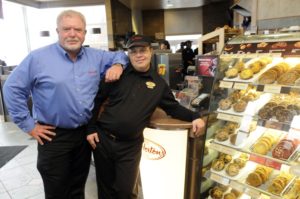
Mark Wafer and a Tim Horton's employee

Mark Wafer (left) and Clint Sparling, an employee at one of his Tim Hortons locations

Mark Wafer, President of Megleen Treadstone and owner of several Tim Hortons coffee shop franchises, has transformed his businesses into much more than the routine place to enjoy caffeinated brew. Since opening his first franchise in 1995, Wafer designed his operations to be a proactive source of employment for people with disabilities. His success is now an established model that other businesses follow in doing the same.

Wafer’s first experience of hiring an employee with a disability was prompted by supply and demand. Having purchased his first franchise, he was confronted by a scarce labor market and so broadened his employee criteria. With that success and others like it, Wafer found that hiring people with disabilities is not simply a matter of altruism —it is good business. He has since founded SenseAbility to help other businesses learn the advantages of expanding hiring criteria to include people with disabilities.

Starting Out

Wafer and his wife launched their first franchise, Tim Hortons, in the early 90’s: “We liked the Tim Hortons franchise model and opportunities were available. We opened our first restaurant in East Toronto in 1995. We hired our first worker with a disability right away. We purchased an existing location with an already built clientele so we were very busy from day one. My staff however was all new and could not keep up so I had to hire someone to look after the dining room, dishes, tables and dishwasher and that’s how we discovered Clint Sparling.”

Sparling, who has Downs Syndrome, was Tim Hortons first inclusive hire. Wafer, who is Deaf, is especially aware of the barriers that many people with disabilities face in the job market. Extending this opportunity to Sparling made good business sense for both men. Wafer has made independence a possibility for Sparling and Sparling has been an invaluable employee. Now more two decades later, Sparling is still with Wafer’s Tim Hortons franchise. Wafer proudly reports “Clint has been with us for twenty-two years. He is married now and owns his own condo as a result of having a job and a paycheck.”

Good for Business

Within a few weeks of purchasing his first location, Wafer added a second. Throughout the process, he continued to hire employees with intellectual disabilities. Not long after, he began to take note of the economic benefits to him that resulted from his inclusive employment practice.

Wafer states, “The average annual employee turnover in the QSR business (Quick Service Restaurant) is about 100% and perhaps higher in high density areas. Mine is 40% or lower.”

He adds that the average tenure of a non-disabled worker in his franchises is one year and three months. However, his employees with disabilities stay on the job for an average of seven years. The importance of turnover can be measured in dollars and cents. According to Wafer, “an entry level worker costs about $4,000 to replace.” But, he also says that he discovered employing workers with disabilities not only reduced employee turnover but also increased productivity, innovation and safety. In addition to measurable, associated costs, there are other costs, which are not as easily quantifiable: “Once a person with a disability learns the task, they will only do it that way and not take shortcuts. They continue to do it the right way, time after time.”

Of course, these positive economic measures buoyed Wafer’s desire to continue his employment initiative: “As I began to see clear economic factors, lower absenteeism and higher productivity, I continued to hire workers with intellectual disabilities and decided to open our doors to workers with any sort of disability. As long as they could do the job, and if the training made sure they had whatever accommodation they might need, we hired them. ”

Since its first hire in 1995, Wafer’s franchises have employed over 150 people with disabilities in every aspect of the business including management: “Today, 46 or about seventeen percent of our 250 employees identify as having a disability in all six current locations. They are pretty much evenly distributed among my franchises.” (Wafer notes that the Tim Hortons chain does not have a franchise-wide policy on the employment of people with disabilities.)

Recruitment, Training and Hiring

The recruitment process, according to Wafer, is quite simple. “We are well-known in the community so candidates with disabilities apply often and are open about their situation. From the beginning, I set the tone for inclusion and my managers slowly bought into it. Today, when a manager interviews a non-disabled candidate, we ask how that person feels about working with people with disabilities. If we don’t get the right answer, that person does not get a second interview.”

Canadian Government’s Role

According to Wafer, the role of government is to lead by example and provide awareness. It is up to the business and corporate sectors to make change happen. “Canada”, he observes, “has little in the way of legislation that helps people with disabilities find work or that supports them when they do find work.” Wafer himself was appointed to a government panel in 2012 to find out why more businesses were not hiring workers with disabilities. He says, “The report resonated with corporations and the one take-away for the panel was  that corporations wanted to hire more from this massive talent pool but really didn’t know what to do. So, the Canadian Federal Finance Minister provided money to establish the Canadian Business SenseAbility.”

“The idea for this association,” he explains, “came from my time on the panel exploring the success in the U.K. As part of my interviews with corporate leaders I became aware of a group known as the British Forum on Disability and it was their ideas and procedures that gave us the idea of starting SenseAbility.  This is a membership driven association with the express purpose of creating disability confident companies. We work with the CEO and executive level, as well as HR and operational managers. Today, twenty-one corporations representing 800,000 employees are members of SenseAbility.” The organization provides these companies with an abundance of information that they select in order to make it easier for them to hire people with disabilities into their companies. Tim Hortons Corporate is a current member of SenseAbility. They, too, recognize the benefits Wafer I did. The real success with the brand however has been with other franchise owners across the country and the U.S. In Ontario alone there are 500 restaurants that have hired at least one worker with a disability.

Honors for Wafer

As the recipient of a variety of industry awards, Wafer’s work has been recognized for its value both to Canada and the Canadian economy.  He observes, “In many areas of Canada we have a labor shortage that is only going to get worse. I suggest to restaurant owners in these areas to focus on the disability community for long term excellent employees. This is a new concept to them because they may currently view disability as a negative rather than a contributing factor to success. We’ve found that building awareness and educating business owners works.”

There are two sets of initials that follow Mark Wafer’s name:  MSC and OMC. Awarded to Wafer by the Queen Elizabeth II in 2016, the MSC is the Meritorious Service Cross and is one of the highest awards for public service that can be given in Canada. The OMC, the Ontario Medal for Good Citizenship, is the second highest award in Ontario and was given to Wafer in March 2017. According to its website, “this medal recognizes individuals for their exceptional long-term efforts and outstanding contributions to the well-being of their communities.”

The Future

Moving forward, company-hiring credos must be: “Employable until proven otherwise.” Mark Wafer’s proves that this is a viable model: “In general we know that in five years we have found work for over a thousand people. This tells us that the message of inclusion for business is working. We don’t keep that data for the purpose of the numbers – we don’t want the numbers. Many of the projects we have initiated are based on the ‘business” model and how hiring impacts productivity, reduces absenteeism and turnover. Susan Scott Parker, CEO and creator of the British Forum on Disability, has worked on it with us and helped us to spread the word.”

He goes on to observe, “We have taken our model to other provinces and it is doing well there, too. We even went into the United States, to Syracuse and Rochester. When we tell them they are going to make more money by hiring people with disabilities, the message is heard! They go back and make it work with the result of a lot of people with disabilities finding work.”

Although Wafer does not like to measure with numbers, he says, “I worked on a project with the Ontario government that ended two years ago. We did some research on savings to government if a certain number of people with disabilities found jobs and figured out that including seasonal and even minimum wage jobs, the government saves $78 million annually with the employment of five thousand workers with disabilities.”

Wafer concludes with this: “One of the things I do is public speaking to explain the impact. The percent of people in Canada who have a disability may only be fifteen percent (roughly the same as in the U.S.) however, when you add in family members, the percent of the population rises to fifty-three percent! That number of people cannot be ignored.”

People with disabilities do not make up a niche market. They are the wives, husbands, sons, daughters, brothers, sisters and friends found in every community. Indeed, they are a massive market segment for the goods and services of those who hire people with disabilities. As Marc Wafer attests, not only are they a proven employee resource, they are extensions of the promising economic networks encompassing them.

Avada WordPress Theme

Filed Under: Featured, Profiles in Excellence Leave a Comment

Tags: Canada, disability employment, employment, inclusive hiring, Marc Wafer, SenseAbility, Tim Hortons

find this post helpful? Try these:

An Interview with Jim Sinocchi, Head of JPMorgan Chase's Office of Disability InclusionJPMorgan Chase and the Four-Pronged Approach to Inclusion Randy and Austin LewisDoing Good is Good Business
share

Finding a Room that Fits

April 5, 2017

By Joan Leotta

Accessible Travel Online logo

Accessible Travel Online company logo

Whether travelling for business or pleasure, people with disabilities desire an experience made memorable by ease of access rather than logistical nightmares. This is especially true when it comes to lodging. In the United States, most major hotel chains have rooms designated for people with disabilities, eliminating many concerns of suitable access. Until recently, however, there were no internationally focused, hotel vetting services for the intrepid traveler with an eye toward travel beyond the U.S. Marlies van Sint Annaland, CEO and Founder of Accessible Travel Online (ATO) has changed that. Now, seeking, finding, and booking an accessible hotel is as easy as point and click.

About the Service

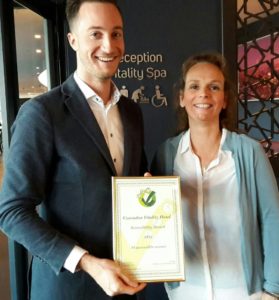
A man holds an award, standing next to ATO founder Marlies van Sint Annaland

ATO founder Marlies van Sint Annaland (right) presenting an award to Corendon Vitality Hotel Amsterdam for outstanding accessibility services

It was a new friendship with a kindred spirit that first opened Van Sint Annaland’s eyes to the carefully negotiated worlds of people with disabilities: “About a decade ago, I met a woman in my neighborhood. She was my age, passionate about travel like me, full of energy like me and she was a free bird, a free mind. We drank coffee and connected easily. The world of ‘accessibility’ or ‘disability’ was completely new to me and I had, as many others, until that moment, never realized what it takes to get through the day facing all the obstacles, misunderstandings, prejudice and (sometimes) unwanted help. I decided to do something about it and learned that out-of-the-box thinking was very helpful.”

In search of a practical solution to the problems she saw, Van Sint Annaland decided to focus on travel. “I learned that the biggest obstacle to overcome is that other people just don’t know how to realize accessibility or where to turn to if they want to know. I thought of traveling and wondered what that world would look like, as in an accessible travel world. Being a big hotel fan, I created Hotelaccessibility.com. In the many talks I had with people with disabilities, I heard the same thing over and over. Accessibility was always a promise, (in hotels) but rarely a given.”

Acquiring and Disseminating Reliable Information

ATO’s chief objective is to connect the consumer with accessibility information that is reliable and visible.  Van Sint Annaland explains that because “there are many online resources on accessible locations or accommodations — mostly operating locally — it is difficult to find your favorite destination and information about its accessibility. Just like in every world – politics, education, travel – there are a thousand ‘islands’ in the world of accessible travel. I want to be the ‘Bridge Builder’. Helping the tourism business where needed and making sure that people with disabilities can wander along all these beautiful ‘islands’ and travel the world.”

She continues, “Accessible Travel Online’s ultimate goal is to connect people with as many beautiful locations on this planet as possible, creating one big travel platform where people with disabilities will find what they need, and what they want. Let’s travel the world! TOGETHER!”

According to the ATO website, newly vetted hotels are added monthly to an already well-researched and sizeable variety At present, the site offers information on accessible hotels in: Africa, Australia and New Zealand, Europe, the United States and Canada, South America and Southeast Asia:  “More countries will be represented on Hotelaccessibility.com every time we set up a new partnership with local travel agents. If you don’t want to miss updates, please subscribe to our news update or follow us on social media via Facebook, Twitter or Instagram.”

Trusted Advisors

To properly vet hotels, Van Sint Annaland relies on a small group of advisors and personal contacts who gather the hotel information ultimately appearing on the site. This differs from the model used by most travel rating services that typically list the experiences of travelers who have stayed in a particular hotel. ATO advisors are selected specially to look for ways in which the hotel serves people with disabilities in its hospitality profile.

Becoming an advisor requires more than a keen interest in world travel. Returning to the company objective of providing reliable information to is customers, Van Sint Annaland selects individuals who bring a personal awareness of just how invaluable

reliable information can be. As she explains, “Experienced travelers with a disability themselves, is the basic starting point to join the ATO team. Our motto is not to talk about disabilities, we talk about abilities. I never ask people why they are in a wheelchair for instance. It’s obvious, right? So, we make sure we can take away barriers and focus on the possibilities. Melanie and Mirjam, who coordinate the HotelCheck procedure, are trained experts in hospitality and are very good in motivating others to share their skills in endurance, positive thinking and helping others. Helma singlehandedly changed the law in the Netherlands, making sure assistance dogs are never to be refused on any property. Representation with advisors in the USA is coming soon.

In describing the feel and function of the website, Van Sint Annaland says that ATO is, above all, a community, a platform where people can share information: “Yes, we allow hotels and accommodations who have ‘passed our test’ to promote themselves on our site. We don’t work with reviews (per se), but we use our (in house developed) HotelCheck ratings. These set an international standard and a universal quality label travelers can rely on.”

Hotels also seem to prefer the HotelCheck method with trained advisors. According to Van Sint Annaland, ATO has been “testing hotels in our region for three years and the feedback from the hotels involved was unanimously the same. All hotel managers valued the time spent with a HotelCheck consultant because it created the opportunity to ask questions and learn how to improve or facilitate accessible amenities or services.”

How the Site Works

As Van Sint Annaland discussed earlier, ATO bridges the international hospitality industry and travelers with disabilities. She goes on to describe how ATO facilitates this relationship: “The key to helping clients Find a Room that Fits their needs is the round-up of the varied, small services that operate in Europe. Ours is a one stop shop …  for example, The Corendon hotel in the Netherlands has been listed  since September 2015 and they won our Accessibility Award 2016 .”

This hotel, whose website is https://www.corendonhotels.com/corendon-vitality-hotel-amsterdam, offers many accessible rooms. She says, “We have worked with the Corendon Vitality Hotel in Amsterdam from the start, before it was built! They have two accessible rooms on each of the seven floors. 

She further advises, “Should clients desire hotel reviews, AccessAdvisr.com, is a standard resource. Co-owner and Managing Director Rob Trent provides a service that effectively complements ATO: AccessAdvisr gives disabled people the opportunity to provide a real-world view of how easy-to-access different places and transport stops are for disabled people. If a place gets a poor review, we’ll feed that back and campaign for better accessibility. If it gets a good review, we’ll feed that back too!”

The Future

Going forward, ATO plans to focus expansion in areas where they have already made successful inroads. But this does not mean that newer inroads will not also be made. In the spirit of its slogan, “Travel without Limitations,” the company has recently begun a U.S. operation to further ease the paths to worldwide travel. In fulfilling her dream, Van Sint Annaland has helped others fulfill theirs. ATO offers a map of possibility for travelers with disabilities, who are well-accustomed to knowing their limitations and then defying them.


online movies 2017

Filed Under: Featured, Profiles in Excellence Leave a Comment

Tags: accessibility, Accessible Travel Online, hotels, Marlies van Sint Annaland, service animals, travel

find this post helpful? Try these:

Default ThumbnailAccessible Gaming: More Than Fun Image of Emily with the Tin Man along with a quote: I'm incredibly moved by what our engineers have created with the talking guide and couldn't be more proud of how the team brought Emily's story to life. - Brian Roberts, Chairman & CEO of ComcastComcast says, “Open Sesame!”
share

SMG Celebrates Women’s History Month: Judith Heumann

March 27, 2017

As the Solutions Marketing Group team continues to celebrate Women’s History Month, we are highlighting the significant contributions of exemplary women with disabilities. Today, we honor International Disability Rights Consultant and a pioneer in the disability rights movement, Judith (Judy) Heumann.

What sparked your desire to pursue disability advocacy as a career?

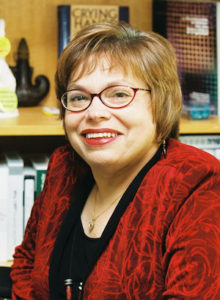
Judith HeumannWhen I was growing up, I wanted to be a teacher. I wanted to be a singer. I wanted to be an actress. I did not choose to become a disability rights advocate. But there were so many barriers limiting my options, both professionally and personally. Lack of accessible transportation, lack of accessible streets, prejudiced views towards me, my friends and millions of others I didn’t know because we had a disability. It became obvious to me that in order for me to pursue my dreams, I would have to work on removing these barriers. The civil rights movement enabled me to use the word “discrimination.” I was being discriminated against because I had a disability. I also was being discriminated against because I was a woman – a woman with a disability. Once I was able to publicly speak using the term “discrimination” in violation of my civil and human rights, I became much more empowered. Working with disabled people has always been a critical part of my life. While we have different types of disabilities, we faced discrimination. I realize as progress is made to end discrimination, it enables us to exercise our human rights. As a result, we become more empowered and recognize our voices must be stronger. I have learned that I cannot be ashamed of who I am. My disability has made me a stronger person.
What is your educational background?

I was denied the right to go to school until I was 9 years old. When I started going to school in the 4th grade, I was in a class only for disabled children that was racially integrated. I was the first student from my special education class to graduate and go to high school. Before that, students in my special education class stayed in the school until they were 21 and then went to segregated sheltered workshops. I went to a high school in Brooklyn, but couldn’t go to my neighborhood school since it wasn’t accessible. From elementary through high school, my daily commute was two to three hours. This was so long because we had to pick up other disabled students. Those long rides were a great opportunity for me to talk with my friends who had disabilities.

After high school, I went to Long Island University in Brooklyn, New York and majored in both speech and theater; and minored in education.  I studied to be a speech therapist, but had a passion to be a teacher. I shifted my focus and began taking classes to prepare me for the classroom. At that time, there were no teachers who used wheelchairs in the New York City public school system. After suing the  New York Board of Education because they considered my use of a wheelchair to be a fire hazard, I won the case, obtained my teaching credential and taught for 3 years, This made me the first wheelchair user to teach in the state of New York. I then decided to move across country to get my Masters in public health at University of California, Berkeley.

What is your specialty?

Advocacy, community organizing and public policy.

What was your first job?

I had many small jobs while in college. My first job was working at Camp Jened as an intern in upstate New York. This was a camp for disabled youth and I had been a camper there for years. I also worked at Long Island University as a college work-study student in the president’s office. While in college, I had a summer internship working as a social worker at a community senior center in Brooklyn.

What was your favorite job?

I don’t have one job that was my favorite job. I have been very fortunate to learn from every position I’ve had.  After suing and getting my teaching license, I was fortunate to teach disabled students for three years. The segregated environment I worked in was not ideal for me, or the students. But it gave me an opportunity to encourage the disabled students to dream their real dreams and to think about careers that they were interested in rather than what people told them they should do.

I also had an unpaid position as the President of Disabled in Action, in New York. This gave me and my friends the tools and experience we needed to advance the rights of people with disabilities.

I also served at the Berkeley Center for Independent Living (CIL), as the Deputy Director. That was a phenomenal job! As the first Center for Independent Living in the United States, we were able to do work I never dreamed possible. I worked alongside non-disabled and disabled people to fight for equality. I learned how to organize to get city, county, and state government to be more responsive to the needs of disabled people, which was a phenomenal experience. The Section 504 demonstrations were just one part of the work we were able to do and worked in collaboration with other disability rights organizations. We also worked with organizations from the labor movement, women’s movement, the interfaith community and every day citizens who cared about equality and drove that message in all of our work. Working at CIL was like being in a candy store.

I was a co-founder of the World Institute on Disability and worked collaboratively with Ed Roberts and Joan Leon. This was the public policy organization run by people with disabilities. This was a difficult but wonderful job because we created an organization from its infancy. We demonstrated that the voices of disabled people were critical in the areas of public policy and research.

My job as the Assistant Secretary for the Office of Special Education and Rehabilitative Services was an honor I never thought I would have. Working in the Clinton Administration was difficult, but very rewarding. We pushed an agenda of inclusion, which brought voices of disabled people and parents to the table. We also hired disabled people in senior positions and worked to integrate disability across the Department of Education. We collaborated with agencies across the government to advance disability rights, which resulted in a progressive legislative agenda. This provided students with an opportunity for greater inclusion, not only in the classroom, but also placed focus on acknowledging that employment was a critical outcome of education. Supporting and strengthening Centers for Independent Living was also an important part of our agenda.

I also worked at the World Bank, as their first Advisor on disability. This position had some unique challenges. While the President of the World Bank was supportive of inclusion, many others did not see its value, which presented barriers. But, I am very proud of the work that we did to advance disability inclusion within the World Bank’s agenda.

As the Director of the Department on Disability Services for the District of Columbia, I had the privilege of improving services for disabled people, but also providing them with a voice and seat at the table.  I learned, first-hand, about the challenges the District faced and how we could make a difference.

Finally, I served as an Obama Appointee and was the first Special Advisor for International Disability Rights at the State Department. I had a small, dedicated team, and together we advanced disability inclusion in U.S. foreign policy and diplomatic work. This job enabled me to take what I learned over 40 years and share that knowledge to advance the human rights of disabled people around the world. I traveled to many countries, worked with our embassies, held meetings with international disability rights organizations, and governments to develop a message of disability inclusion throughout the world.  My role was to represent the U.S. government and President Obama to express our views, and shed light on removing discriminatory policies and practices which limit opportunities for disabled people around the world. I often shared the progress we’ve made, and where we still need to do more work within the United States. I always emphasized the importance having diverse voices of disabled people at the table.

What piece of advice do you have for women with disabilities?

Dream big, work hard, work in collaboration with others, feel proud of who you are and never take “no” as an answer.

What do you want your legacy to be?

I believe in justice and equality for ALL. JUSTICE and EQUALITY doesn’t come easy. We need to respect each other and fight together for change – here and around the world.

How can we find you on social media?

Facebook: https://www.facebook.com/judith.heumann

Twitter: @judithheumann

купить кресло мешок украина

Filed Under: Profiles in Excellence Leave a Comment

Tags: advocacy, Judy Heumann, Women's History Month

find this post helpful? Try these:

Kathy MartinezSMG Celebrates Women’s History Month: Kathy Martinez Six-year old model Kyrie UkemaModeling: Another Way to Advocate
share

SMG Celebrates Women’s History Month: Kathy Martinez

March 22, 2017

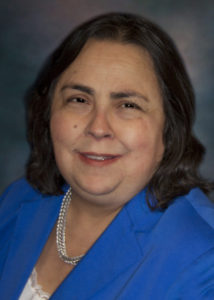
In honor of Women’s History Month, Solutions Marketing Group recognizes and celebrates the achievements of women who’ve broken barriers, defied odds and make our world better. Kathy Martinez has shattered ceilings in government and corporate America and is the Senior Vice President and Head of the Disability Segment Market Brand and Strategy for Wells Fargo.

Kathy MartinezWhat sparked your desire to pursue disability advocacy as a career?
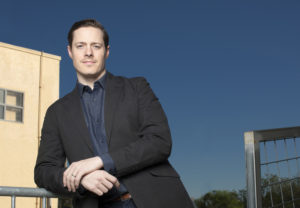
Growing up, people often reacted to the fact that I was blind—not as much to the fact that I was a woman or a Latina. I noticed how differently I was treated than my sighted brothers and sisters.  When I was looking for a job in the early ‘80’s, the options were extremely limited and opportunities to escape from the poverty trap were practically nonexistent. I also noticed that when a friend or relative became disabled they had little access to services and opportunities, which are available to the nondisabled public and their friends and associates immediately lowered expectation for that person after the person acquired a disability. Those were some of the drivers that catapulted me into being a disability rights advocate.

What do your responsibilities include in your role at Wells Fargo?

I am responsible for establishing an enterprise-wide focus on improving the accessibility of Wells Fargo products and services for customers and team members with disabilities. This includes collaborating with Wells Fargo line of business and channel leaders, and the company’s Diverse Ability Team Member Network to implement a comprehensive strategy around recruiting, philanthropic donations, online accessibility and vendor policies dedicated to serving people with disabilities and their families.

Prior to working at Wells Fargo, where did you work?

I joined Wells Fargo in March of 2015 from the U.S. Department of Labor where I served as the Assistant Secretary of the Office of Disability Employment Policy (ODEP). I led ODEP in putting policy priorities into practice through several innovative grant programs.  These include Add Us In, through which a nationwide group worked to increase the capacity of small businesses to employ people with disabilities. The grant program also included the Employment First State Leadership Mentor Program, through which several states received support to promote community-based, integrated employment as the primary outcome for people with significant disabilities.  

Under my leadership, ODEP also launched the award-winning Campaign for Disability Employment, a national, multi-organization public awareness initiative that educates about the value and talent people with disabilities bring to America’s workplaces and economy.  The campaign produced two television public service announcements (PSAs), “I Can” and “Because,” both of which challenge common myths and misconceptions about the expectations and job skills of people with disabilities.  

Prior to being appointed by the President Obama in 2009, I served as executive director of the World Institute on Disability. There I successfully managed a number of initiatives, among them Proyecto Visión, a national technical assistance center to increase employment opportunities for Latinos with disabilities in the U.S.  I have also served on the National Council on Disability, the board of the U.S. Institute of Peace, and the State Department’s advisory committee on disability and foreign policy.

What is your educational background?

I have a BA in communications and organizational/industrial psychology.

What is your specialty?

My specialty is designing, developing and implementing strategy, programs and projects, which result in the inclusion of people with disabilities in nonprofits, government and the private sector.

Here is a collection of places you can buy bitcoin online right now.

Filed Under: Profiles in Excellence Leave a Comment

Tags: advocacy, disability, Kathy Martinez, ODEP, Wells Fargo, Women's History Month

find this post helpful? Try these:

Judith HeumannSMG Celebrates Women’s History Month: Judith Heumann Six-year old model Kyrie UkemaModeling: Another Way to Advocate
share

Convo Connects the Deaf Community to the World by Making Conversations Happen

March 8, 2017

By Joan Leotta

When hearing customers call San Francisco based Mozzeria Pizzeria to place an order, they probably do not realize they are phoning a Deaf-owned, Deaf-staffed eatery. Melody Stein, Mozzeria’s owner, manages her restaurant by concentrating on the business at hand: the pizza. No stranger to the business, Stein explains, “my family runs restaurants and I have always wanted to open my own restaurant. Russ, my husband hails from New York City and he loves eating pizza. We compromised by serving Neapolitan pizza in wood burning oven.”

Overcoming communication challenges with hearing customers, however, required thinking out of the box. So, the enterprising restaurant owner used the same communication model of restaurants serving non-native speaking clientele: “When you visit Mexico, a non-English speaking country, how do you communicate with Mexicans? Point to the item on the menu. Gestures. We also offer paper and pen on each table. We use video relay communication and email to communicate with our customers. Technical aides (from Convo) help us get more customers (especially with phone reservations). And of course, video relay helps with phone-in orders. It makes for a practically seamless interface between the two worlds—Deaf/Hard of Hearing (D/HOH) and the hearing worlds.”

Mozzeria and Convo

Wayne Betts, Jr.

Convo Chief Strategic Office and Co-founder Wayne Betts, Jr.

Wayne Betts, Jr., Chief Strategic Officer and Co-Founder of Convo, insures that the Convo products work for Mozzeria’s successful interaction with its customers. In an interview with SMG, Betts shared additional insights into his company’s relationship with the Steins and the larger scope of his efforts to support D/HOH-owned businesses.

The partnership with Mozzeria has showcased Convo’s 21st century innovation and communication possibilities. According to Betts, “Owners Russ and Melody Stein made requests focused on enhancing their restaurant-operating experience. For instance, they kept missing their calls due to the ringing technology they had at the time, with a different provider, and it was distracting and irritating to their patrons. They eventually made the decision to remove the device and as a result, lost the ability to receive incoming call notifications. They wanted a type of visual ringing that would grab the employees’ attention and at the same time remain discreet to patrons. We developed a customized blueprint for their restaurant, strategically placing Convo Lights in specific spots. The solution has proven to be effective with Russ and Melody reporting that their percentage of missed calls has reduced from 50% to 5%.”

He adds, “Convo has supplied 560 various businesses and organizations in the U.S. with Convo Lights, the visual ringing system that Mozzeria uses in its restaurant. We also have a Community Directory which our callers can access via our Convo apps to find Deaf-owned businesses in the nation. Over 250 businesses are currently in that directory and many of these business owners are Convo users.”

Above and Beyond:  Convo’s Commercial Applications

Providing commercial applications capable of maintaining seamless interaction between the Deaf and hearing worlds is not just a business objective. For Betts it is just as much an aspect of the company’s core value to “ensure that our products and features are sign language-centric and Deaf-centric”. Convo Announce is the first such product to deliver communication accessibility and increased safety for D/HOH people. Released in November 2015, Convo Announce enables schools and programs to have a dedicated platform capable of receiving simultaneous emergency and public announcements, both in text and in video, for people who are D/HOH. Prior to this innovation, there were no functionally equivalent emergency and public notification systems for the 420,000 D/HOH students in the United States.

Q & A with Wayne Betts, Jr.

In an interview with SMG, Betts gave further insight into the how’s and why’s of Convo’s success in creating a connection between the hearing and Deaf/HOH worlds.

SMG: How has Convo evolved since its founding in 2009? What features have enhanced the technology and the communication products you offer?

Betts: Since 2009, Convo has changed a lot. Today we are a bigger company with bigger challenges, and we are more ambitious. The first few years our priority was laying out the foundation, which meant growing our pool of interpreters and obtaining FCC certification, and proving ourselves as a competent—and the only—Deaf-owned video relay system (VRS) provider in the industry. After we fleshed out the engineering and marketing teams, which were (and still are) full of Deaf and signing employees, we asked ourselves: “What can we do together? How do we want to shape the world? ” From there, we developed our core values as a company, and created a movement that stemmed from our passion for the Deaf Ecosystem. Our Community Directory grew out of this. The Directory is a feature in our apps that allows users to connect with other local Deaf-owned businesses and Deaf-related organizations, schools and services.

In the future, we want to create new technology in untouched domains. We want to offer a different and better take on the old technology. The question we often ask ourselves is: “How can we change the world with our technology?”

SMG: What percentage of your staff are people from the Deaf community?

Betts: Nearly all of the staff is from the Deaf community. A lot of our interpreters have Deaf parents, and many of them have been heavily involved with the community over the years. Not counting the interpreters, most of us are Deaf ourselves and have been a part of the Deaf community our whole lives.

SMG: Does the fact that Convo is Deaf-owned and staffed contribute to the success of its products? If so, how?

Betts: Without a doubt! I’ve worked for companies in the past where the upper-level people weren’t customers of their own products. Their hearts may have been in the right place, but innovation comes from direct experiences. People who are not Deaf or HOH cannot fully understand what customers need and a lot of their ideas often originate from a business perspective. That approach rarely creates the best experience for the customers.

As a Deaf-owned company, our ideas come directly from real experience. In addition, the working environment in an all-Deaf employee company means that when teams meet, there is less explaining on why this idea works or why that idea doesn’t work because we are all coming from the same place. We have shared experiences, values, and language. We understand each other on an intuitive level. Less time spent on discussions means more time for exploring new ideas.

SMG: How does Convo recruit interpreters? Do they receive training from the company?

Betts: The approach we take in recruiting interpreters is different from the approach of other companies. Early on, we established clearly the traits we seek in our interpreters and we have a screening process that measures the level of an interpreter’s reception, voicing, and signing skills. This process is overseen by a panel of people of different backgrounds, qualifications, and roles in the community. Some other companies may review certifications and years of experience and hire only based on those criteria. We believe that the true measure of the quality of interpreters goes beyond what is on their resume, which is why we also put emphasis on the real experience of the calls that they experience. We often pair up the more experienced interpreters with newer interpreters for mentorship opportunities and professional growth. We also provide continuous in-house training.

SMG: How are you planning to grow the business and increase the number of interpreters?

Betts: Our guiding North Star is to always remain Deaf-owned and sign language-centric. We are less concerned about competition with other companies and more focused on doing the work we believe in. This approach is what sustains us as a business and sets us apart from others.

We’ve seen great growth over the past eight years and a lot of it has to do with our connection with the Deaf and signing community. The community— which also includes interpreters and allies as community members—values our integrity and commitment to what Convo stands for. Many interpreters attend our events to learn more about us and from there, we initiate, build, and maintain our relationships with them. We also maintain contact with interpreters who did not succeed in passing our screening process because we care about and want to encourage the positive progression of their professional development. All interpreters, whether they work for Convo or not, are members of our community and we make every effort to treat them as such.

As we grow, we are continuously hiring employees. We are now a mid-sized company and see many ways we can continue to thrive and grow.

SMG: An article featured in the June 2016 issue of WIRED highlighted that many other businesses are now beneficiaries of this new relay technology. Can you elaborate?

Betts: As a Deaf-owned business, Convo has a firsthand understanding of the unique needs of a Deaf-owned and run business. We work closely with each one to provide the technology, resources, and support they need to thrive in a hearing world.

SMG: What do you forecast as the impact of these new video relay service (VRS) applications on the dynamics of communication between Deaf and Hard of Hearing customers and businesses? Do you see new VRS applications making this interaction easier?

Betts: We can definitely see the positive impact VRS has on the relationship between Deaf and Hearing people. There’s no doubt that many Deaf-owned businesses benefit from VRS. Not only do we benefit from VRS but we also make sure that VRS is shaped and designed to meet Deaf businesses’ needs.

Because of VRS, Deaf people are now on an increasingly equal footing. Deaf people are able to do much more than they ever did before with ease and higher efficiency. For example, Deaf business owners can now make their own calls rather than hire a hearing person to shoulder that responsibility. Not only does this give the business owner autonomy but it also creates opportunities to form direct connections with customers.

As a result of this equal footing, communication barriers are being broken through and we have an increased access to information. Ease of access equals opportunities and clearer channels of communication between Deaf and Hearing people mean that Deaf people can better share their unique signing-centric perspectives on all sorts of things. This makes the world a more interesting place.

SMG: Thank you!

Here is a collection of places you can buy bitcoin online right now.

Filed Under: Profiles in Excellence 1 Comment

Tags: assistive technology, Convo, Mozzeria, small business, technology

find this post helpful? Try these:

Photo of Dragon Naturally Speaking software packingJust Say It!
share
  • « Previous Page
  • 1
  • 2
  • 3
  • 4
  • …
  • 9
  • Next Page »

Welcome

Whether you are interested in breaking ground in the market as a company, you are living with disability or love someone who is, we’re committed to keeping you abreast of what matters to people with disabilities—and why—so stay with us.

SIGN UP

Get the latest SMG updates in your inbox!


Categories

  • Featured
  • General
  • Notes from the Founder
  • Profiles in Excellence
  • SMG Tip
  • Video

Archives

  • March 2020
  • February 2020
  • May 2019
  • January 2019
  • November 2018
  • September 2018
  • August 2018
  • July 2018
  • May 2018
  • March 2018
  • February 2018
  • January 2018
  • December 2017
  • October 2017
  • September 2017
  • July 2017
  • May 2017
  • April 2017
  • March 2017
  • February 2017
  • January 2017
  • December 2016
  • November 2016
  • October 2016
  • September 2016
  • August 2016
  • July 2016
  • April 2016
  • March 2016
  • February 2016
  • January 2016
  • December 2015
  • November 2015
  • October 2015
  • September 2015
  • August 2015
  • July 2015
  • June 2015
  • April 2015
  • March 2015
  • February 2015
  • January 2015
  • October 2014
  • July 2014
  • January 2014
  • December 2013
  • November 2013
  • July 2013
  • June 2013
  • March 2013
  • January 2013
  • December 2012
  • October 2012
  • September 2012
  • July 2012
  • April 2012
  • December 2011
  • October 2011
  • August 2011
  • April 2011
  • February 2011

Contact Us

Quick Facts

The disability market consists of 56M people, representing an annual disposable income of $544 billion.

The disability market is more than twice as large as the tween market (20M), and has almost 3X the disposable spending power ($180B).

According to the U.S. Census Bureau, of the 69.6 million families in the U.S., 20.3 million families have at least one member with a disability.

A University of Massachusetts Boston survey found 92% of consumers felt favorably toward companies hiring people with disabilities; 87% prefer to do business with such companies.

By the year 2030, 71.5 million Baby Boomers will be over the age of 65 and demanding products, services, and environments that address their age-related physical changes.

Featured Clients

Darden Restaurants
American Express
AT&T
Sodexo
Bank of America
Wellcare
BlueCross BlueShield
ESPN
Zappos
Nike
Hilton
Get the latest SMG updates in your inbox!

678-805-7091 | info@disability-marketing.com

© 2025 Solutions Marketing Group

| a doodle dog creative website and brand