Solutions Marketing Group

Providing clients with innovative strategies that position them to understand, penetrate and retain the disability market.

  • Home
  • About
  • What We Do
  • Blog
  • Learn From Us
    • Boot Camp
    • eBook
  • Contact
  • Home
  • About
  • What We Do
  • Blog
  • Learn From Us
    • Boot Camp
    • eBook
  • Contact

JPMorgan Chase and the Four-Pronged Approach to Inclusion

July 10, 2017

An Interview with Jim Sinocchi, Head of JPMorgan Chase’s Office of Disability Inclusion 

By Joan Leotta
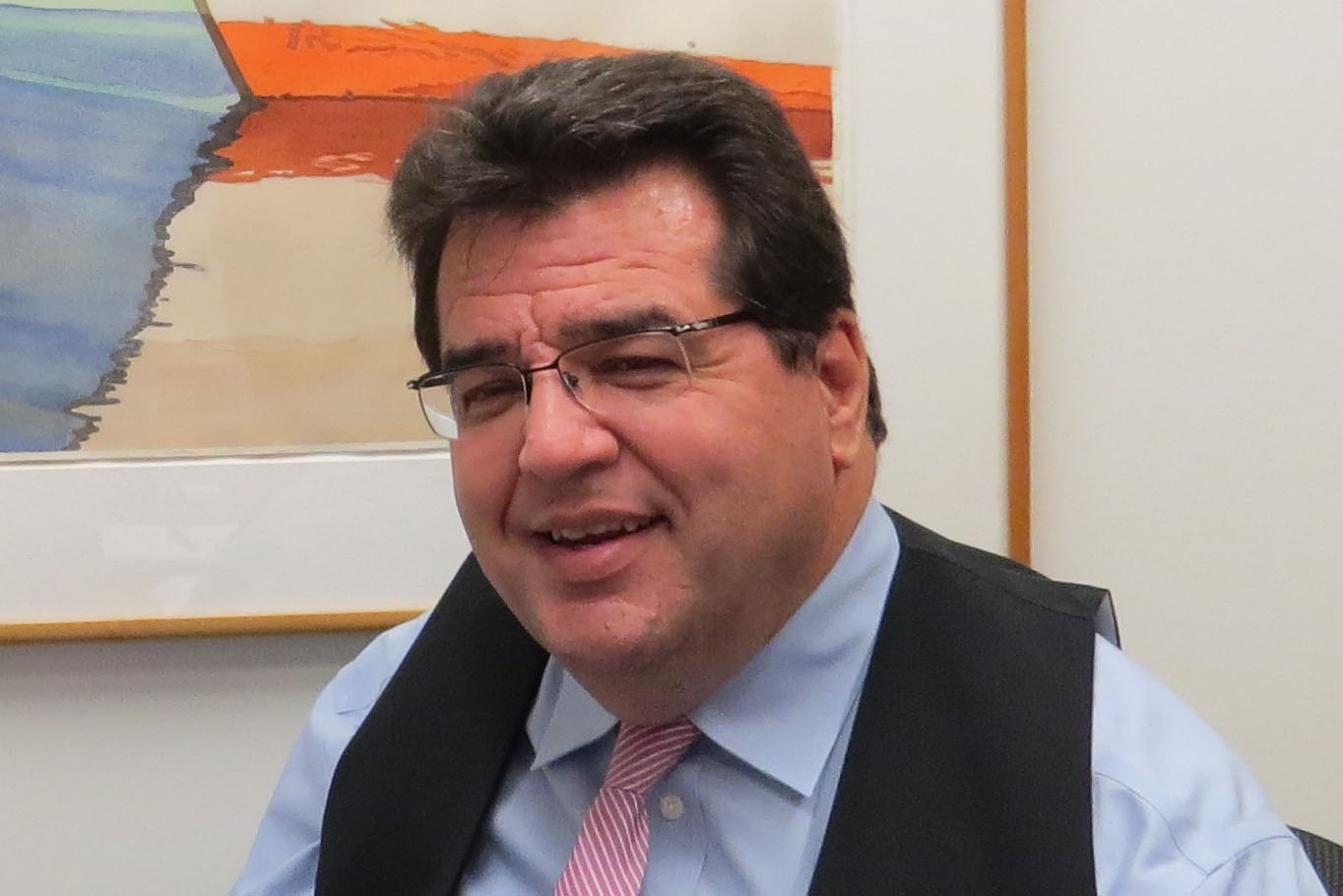
Jim SinocchiIndustry standard-bearer, JPMorgan Chase & Co., has further cemented its commitment to diversity and inclusion with the hire of James (Jim) Sinocchi, Head of the Office of Disability Inclusion. A vanguard in his own right, Sinocchi has promoted disability inclusion awareness for decades. In this new position, he will partner with JPMorgan Chase’s senior leaders to establish consistent standards and processes supporting employees with disabilities and employees who care for family members with disabilities. Prior to joining JPMorgan Chase, Sinocchi served as the co-chair of the IBMers with Disabilities Global Task Force. While there, he collaborated across multiple internal and external channels to create awareness and understanding of policies, initiatives, and Human Resources and Diversity programs. Sinocchi uses his considerable skillset to serve the community as a board member of organizations committed to supporting people living with disabilities. His business acumen makes him sought-after, but his empathy and passion have made him a pioneer.  Since 1980, Sinocchi has lived with C5-C6 quadriplegia, the result of a New Year’s Eve surfing accident. In this month’s SMG Profile, Jim reflects on the intangibles and tangibles that sustain innovation and inclusion in the workplace.

SMG: When did JPMorgan Chase institute the Office of Disability Inclusion?

Sinocchi: JPMorgan Chase has for years worked on improving access to people with disabilities and fostering a culture of inclusion for employees. The company long sought to improve the employee experience, engage with outside organizations (particularly with advocacy organizations), products, and services for people with disabilities. One of our nine firm-wide business resource groups is dedicated to providing a voice for employees with disabilities and those who serve as caregivers.

A little over a year ago, our executives decided they needed to take the step of creating an Office of Disability Inclusion to increase focus on matters related to employee accessibility and drive consistency in our methodology, standards and practices. 

SMG: Jim, when did you join the company?  

Sinocchi: I joined in June 2016. 

SMG: How has the direction of disability inclusion changed over the last twenty years?

Sinocchi: The mindset of companies 20 years ago was, “Let’s hire people with disabilities. Let’s give them jobs.” Today’s mindset – at forward-thinking companies – is, “Let’s hire people with disabilities, and see who among them has leadership potential.” Stereotypes and attitudes have changed and people with disabilities are being promoted to middle and upper management roles. However, people with disabilities continue to face barriers to equal opportunity at work. 

I use The Four A’s to serve as a roadmap for hiring people with disabilities and enabling them to contribute to the company, and the country. The Four A’s are: Attitude, Accommodations, Accessibility and Assimilation. If companies work on those four areas, they’ll become part of the new era of hiring people with disabilities and enabling them to contribute to the company and the country.

SMG: How did you develop the Four A’s? Why do you like it as an approach for inclusion?

Sinocchi: I was trying to come up with an answer to the question: “How can a company make someone with a disability feel truly comfortable and help that individual succeed?” Companies can teach people with disabilities how to be leaders just as they do with able-bodied people. When people with disabilities are seen as C-suite leaders, accessibility and inclusiveness will enrich that company’s culture. 

We can also teach managers and executives to recognize leadership potential in a person with a disability. Here’s a secret: it’s the same methodology used with an able-bodied person. That acknowledgment alone will change paradigms and break the glass ceiling for the employee with a disability. We’ve done it with gender, with orientation, with race, with religion – but we haven’t done it – yet – for people with disabilities. 

Assimilation will be the real game changer – the mark of a great company. When people with disabilities can assimilate with their able-bodied colleagues, when people talk to a colleague with a disability and don’t think about their disability, we will know we’ve made a lasting difference. 

SMG: How do the four A’s work, specifically at JPMorgan Chase? Has disability inclusion changed at JPMorgan Chase since the Office of Disability Inclusion began?

Sinocchi: JPMorgan Chase looks at the whole employee when they join the company. We look first at what the individual can contribute to both the company and our clients. We make it clear that we want people for their intellectual capacity and talent and we will do everything we can to accommodate them in a reasonable manner. 

The Four A’s codifies this though, making it easy for people to understand what we’re trying to accomplish. Rather than use medical jargon or scientific data, The Four A’s are already in people’s vocabulary and represent the standard dictionary definition of each word; it’s straightforward so that people who manage and work with colleagues with disabilities realize it’s just about how we treat people and make sure we’re not afraid of being politically incorrect. 

To help break down the barrier of “political correctness,” we launched a video series called “The Disability Dialogues,” where senior managers sit down with employees who talk about their disabilities. They speak openly about challenges they face and any they’ve overcome at work, and invite colleagues to ask questions they may have once been afraid to ask. 

The Office of Disability Inclusion is a global, firm-wide operation. Our company has offices in more than 60 countries and reasonable accommodations are a part of how we do business around the world. So, if a candidate has the talent and skills to do a job well, we want them. And, we will provide as many tools as we can to help them do their jobs to the best of their abilities. 

SMG: Can you share any data on the number of company employees who identify as having a disability? Has that number increased since the Office of Disability Inclusion began operations?

Sinocchi: As you imply in your question, disability is something that people self-identify. We know that many have disclosed their disabilities for the first time since the Office of Disability Inclusion was established. And we know that many were afraid to disclose their disabilities because they thought it might hinder their career. But we also know that we have more employees who are still getting comfortable with self-identifying and we’re working on making sure that they know we can help set them up for success. On the flip side, our employees who work with and manage people with disabilities are also adjusting to the new environment of openness where employees are self-identifying and openly speaking about their disabilities. 

SMG: Are there any partnerships with disability organizations that make the Office more effective?

Sinocchi: JPMorgan Chase has an Office of Nonprofit Engagement (called ONE internally), which reaches out to specific communities and serves as a central point of contact for those communities to reach out to us as well. ONE has a robust and growing program to engage nonprofit organizations dedicated to helping people with disabilities lead full and barrier-free lives. Through ONE, we partner with many of the nation’s leading disability organizations to raise awareness of and provide solutions to some of the challenges facing specific communities. This level of formalized engagement gives our business leaders and product developers’ valuable information about how we can better serve our customers and employees.

SMG: Have you developed any innovative training techniques that you would like to share—for the other employees as well as for the employee with a disability to form an integrated workforce? How do you think this will affect conversation on disability in the workplace?

Sinocchi: We’ve been focused on creating a culture that encourages conversations about disabilities, which we believe will help to accomplish the fourth A: Assimilation. The more people can talk openly about disabilities, the more it means that able-bodied people can see beyond the disability and people with disabilities feel at ease. 
 

Filed Under: Featured, Profiles in Excellence Leave a Comment

Tags: disability employment, inclusion, inclusive hiring, Jim Sinocchi, JPMorgan Chase

find this post helpful? Try these:

Mark Wafer and a Tim Horton's employeeMore Than a Simple Stop for Coffee Ford logoFord: Innovation from the Inside Out
share

The Road to Inclusion in India: An Interview with Ferose V. R.

May 24, 2017

By Joan Leotta

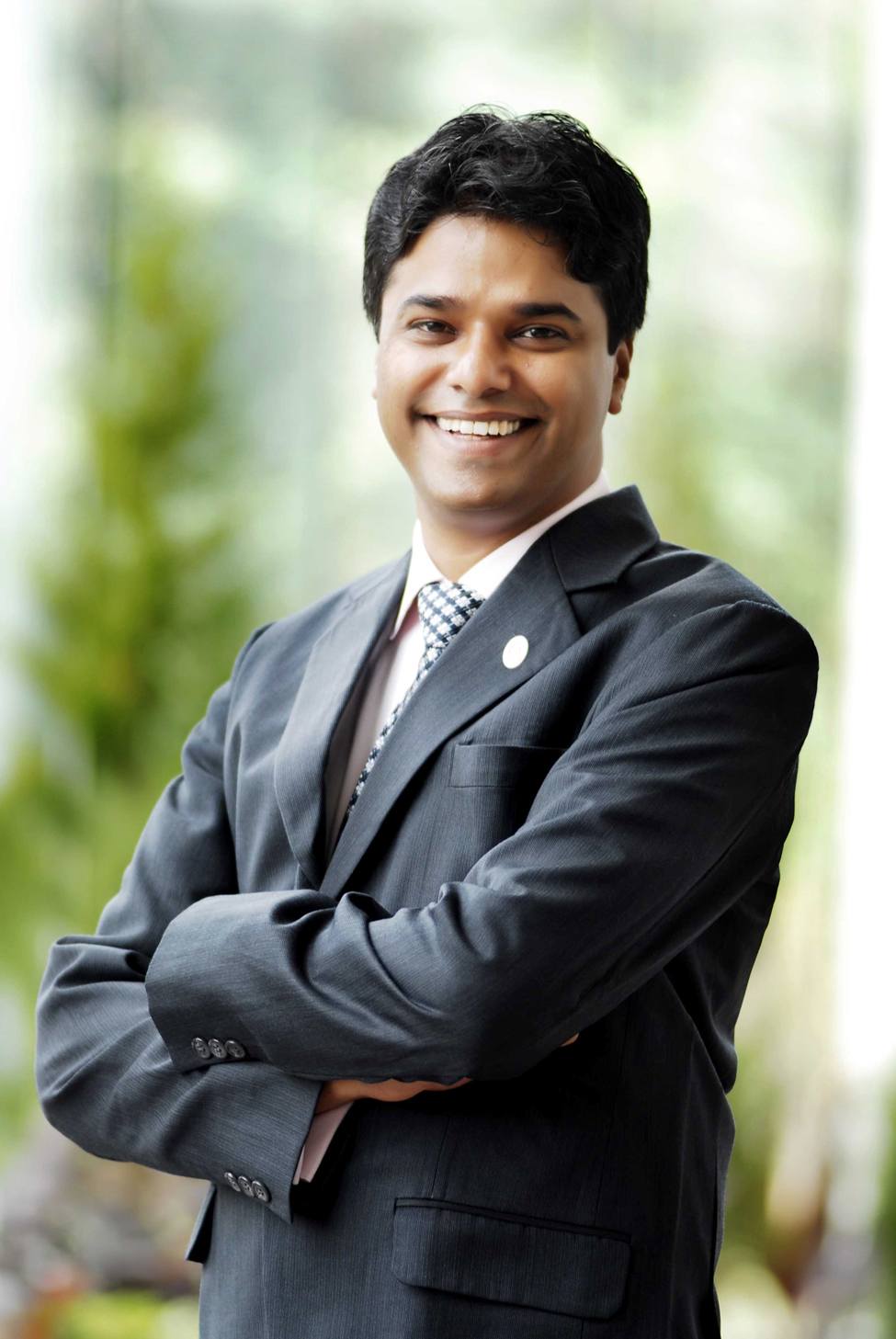
Ferose V. R.Known to his English and American audiences by his first name only, Ferose Velloparampil Rasheed — or simply, Ferose — is a champion of disability rights in India. Though presently residing in the United States, he remains at the forefront of the movement to increase inclusion awareness in his homeland. Ferose’s efforts have resulted in an improved understanding of the abilities of people identified as “with disabilities”, a shift he hopes to see gain even more momentum in the workplace in India. In an interview with SMG, this game-changer gave insight into his labor of love, the cultural shifts that come with inclusivity and the vision of the India Inclusion Summit.

SMG: In the essay on inclusion on your web page, you describe the work of the India Inclusion Summit, a community-driven initiative. Are you the founder?

Ferose: While I founded the initiative, it is truly community driven. Hundreds of volunteers spend their time and energy to make the event a possibility. We created a non-profit organization called the India Inclusion Foundation, where I am the managing trustee and have put a governance model to drive the topic of inclusion across the country. It is 100% community driven as there are no paid members in the foundation.

SMG: In the five years since organization was established, has disability inclusion improved in India? In the workplace? Socially?

Ferose: Our core idea of starting the foundation was to spread awareness. My personal realization was the “awareness” was the lowest common denominator to any challenge. By spreading awareness (on disabilities) we make people sensitive and sensitive people act towards improving the conditions. In India (and many parts of the world), people with disabilities are looked down upon and not included or integrated into society. In many cases, they are seen as a burden. There is a certain stigma attached and we need to fundamentally change that narrative. We should celebrate people’s differences instead of rejecting them for things they cannot do . The India  Inclusion Summit is a celebration of the human spirit – of people overcoming odds in their own ways and making a difference. There are many ripple effects of the work we started. One of the ideas we incubated along with a non-profit, Enable India, was to support the creation of an employment manual for people with disabilities, which later led to the creation of an online academy. When a group of like- minded people, willing to make a change and share their personal journeys, come together we build a larger “goodwill network”. Every year, I hear so many heartwarming stories and the ripple effect of the movement is far and wide. During one of the earlier summits, we had launched the documentary of India’s relatively unknown Deaf and Mute wrestler, Virender Singh – this opened up multiple opportunities and the documentary went on to win the National award! Also, one of the artists (on the autism spectrum) whose paintings we had used during the event went on to be part of the opening with the torch at the Rio Olympics! Sometimes providing the first opening/opportunity is the most important step.

SMG: On your website, http://indiainclusionsummit.com, you describe the steps your organization has undertaken to make inclusion a reality in India. You state: “I’m often asked how an event is going to bring about change? But it’s a four-step process that we’re looking at: the first being the event; second, building a community; third, driving sustainable projects, which will ultimately lead to the final stage of architecting the future”. Based upon this road map, by your estimation, what stage is the country in now?

Ferose: I have seen the topic of inclusion at different stages in different parts of the world. The US is a very progressive society, maybe only matched by the UK. India is still decades behind, especially rural parts compared to urban India. I believe the challenge is in changing mindsets and this can take a whole new generation. Being a technologist, I believe tech has a huge role to play in accelerating the inclusion movement across the world.

The India Inclusion Summit started as an annual event to celebrate our differences. While the event is a great platform to bring everyone together, we are now focused on building a community of people that is engaged and working all year round to drive Inclusion. With the Inclusion Fellowship that we started last year we are also looking at investing in various projects and initiatives that support inclusion. The goal is that through such fellowships we can scale the efforts in this space and also build a more tightly knit community working towards a common cause. Eventually such a community would be able to ‘architect the future’.

SMG: What is necessary then to move inclusion to the next level?

Ferose: Change is a collective process. Today different parts of the community are working in silos – the NGO’s, schools, government, civil society, corporations – all of them need to come together. India has the opportunity to leapfrog into a new inclusive world using the power of technology. But ONLY if everyone works together. Sadly, I don’t see a lot of emphasis on the topic of inclusion around the world – surprisingly, even at the United Nations level, supporting people with disabilities is not one of the Sustainable Development Goals!

SMG: Has your own experience of living in California influenced your strategy on dealing with disability in India, especially related to autism, which you say is not even recognized as a disability there?

Ferose: Yes, I moved to California to provide better care for my son. The experience has been fantastic. However, the special needs care depends entirely on the school district. Also, the costs are very high and I feel a need to democratize this – so every parent has access to the same facilities for their children.

After many years, the list of disabilities has been updated in India and autism is now one of the recognized disabilities. I am however speaking for everyone and every disability – not just autism alone. There has personally been a lot of learning for me in each area living here— whether it is the use of technology in diagnosis, learning, caregiving and job matching or the set-up of systems which allow for ‘time off’ for parents of children with disabilities or early mentorship and inclusive schools for education so that the children are better set up for employment. Of course, we are talking about a completely different scale in a country like India which comes with its own set of challenges and need for unique solutions. The family system and strong community network is a unique aspect of India. The west calls it “inter-Generational living.” In India, we have been practicing that for centuries!

SMG: Do you (in India Inclusion) partner with any national or international disability organizations to formulate goals and solutions to issues?

Ferose: Yes, we have partnered with Enable India, one of the leading NGO’s working in the disability space. While our focus is on awareness, we are now building a strong community of Inclusion Fellows, who would do the groundwork to find solutions for people with disabilities. We have also partnered with other corporations like ANZ, Allegis and CISCO.

SMG: Have you been able to measure your impact since the initiative began? Are there specific statistics, for instance, to indicate how many people with disabilities have gained employment?

Ferose: As I mentioned, our goal is to reach 10 million people with the message of inclusion by 2021 (10 years since we started!). While this is a bold goal, we are confident that we have built a network to amplify the message of inclusion via our various media, the majority of which are online.

SMG: Can you give us anecdotal examples of improvements in social inclusion—housing, accommodations, public transit, etc.?

Ferose: There are many examples – for instance, one of the employees at Sap Labs India,.who was hired as part of the Autism at Work initiative, got married last month. This is a huge step towards living a normal life like everyone else. There are many people who are working towards creating a safe assisted living environment for people with special needs – most of them are however largely driven by individuals.(Note: SAP stands for Systeme, Anwendungen und Produkte in der Datenverarbeitung; or Systems, Applications & Products in Data Processing. It’s a German-founded multinational software corporation that makes enterprise software to manage business operations and customer relations.)

SMG: You have written a book, GIFTED —how do you think that book has helped parents of children with autism and other disabilities?

Ferose: The purpose of writing the book was to share the stories of ordinary people who have overcome extraordinary hardships to live a meaningful and fulfilling life, in spite of the disabilities. The idea was to provide a platform for many unsung heroes. The book has become a bestseller and is now translated into four languages! Just like the Summit, the book is meant to celebrate the human spirit. To me, every time I receive a letter or note from a parent, a caregiver or a person with a disability that the book instilled new hope in them, I feel the book had its desired impact. If we managed to affect the life of even one person, I am satisfied. At the core, GIFTED is about providing hope – that understanding and the right opportunities can unleash the best out of anyone! 

SMG: What is your ultimate goal related to disability inclusion at SAP? How do you think it has influenced other companies?

Ferose: SAP is already recognized is one of the most diverse and inclusive companies – we have won numerous accolades and are also the Inaugural Signatory for White House Tech Inclusion Pledge. SAP’s commitment came as part of President Obama’s Global Entrepreneurship Innovation Summit 2016.

As part of the Autism at Work program, our corporate goal, by 2020, is to employ 650 people on the autism spectrum. Currently, nearly 120 employees fill more than 20 different positions and the program is active in nine countries, including Australia, Brazil, Canada, Czech Republic, Germany, India, Ireland, South Korea, and the United States.

SMG: Is there anything else you would like to tell share with our readers about the work of inclusion in India?

Ferose: One of our realizations is that the best time to a person’s change mindset is at a younger age – so this year, we will focus on “Inclusion for Kids”. We are working on various dimensions –  one of the areas we are working is to do a better matching for jobs.  With the advancements in technology, we have the opportunity to connect people’s abilities with jobs instead of trying to fit people into a given job. Traditional hiring processes are fundamentally flawed in that we reject candidates for what they cannot do rather than select them for what they are good at. If we can change this, we can truly transform employment.


Filed Under: Featured, Profiles in Excellence Leave a Comment

Tags: Ferose V. R., GIFTED, inclusion, India, India Inclusion, workplace inclusion

find this post helpful? Try these:

An Interview with Jim Sinocchi, Head of JPMorgan Chase's Office of Disability InclusionJPMorgan Chase and the Four-Pronged Approach to Inclusion Default Thumbnail“Fit Is Our Superpower”: JCPenney
share

Disability Market Consultation Calls | May 2017

April 27, 2017

Disability Market Consultation Calls presented by Solutions Marketing Group

Many organizations have mastered marketing, advertising, customer experience and employment for multicultural segments, but don’t demonstrate high-level insight and expertise that effectively reaches people with disabilities, their families and friends. It is mind-boggling that a market of 56 million people, with over $1 billion in disposable income to spend, isn’t a priority for most organizations.

In the past, executives have shared reasons they’ve not taking a deeper dive to understand, penetrate and retain the market.  Any of these sound familiar?

  1. ‘We know we should do more, but aren’t quite sure what to do, or how to do it.’
  2. ‘My team was inspired during a disability sensitivity training but there hasn’t been any actionable follow-up.’
  3. ‘We just don’t have the budget this year to spend on integrating the disability market into our overall strategy.’
  4. ‘The disability market is so large, and many people don’t disclose that they have a disability. How do we identify and target specific segments?’

If this sounds like conversations you’ve had, I’d like to talk with you about closing the gaps.

May 9 – 11, 2017, I’m offering 30-minute Disability Market Consultation Calls (DMCC) to discuss and/or answer questions you and your colleagues have about effectively employing, marketing to, or providing an exceptional customer experience to the disability market. My goal is to provide     value and actionable steps your organization can implement. And, did I mention there is no cost?

On previous DMCC, I’ve shared insights on a wide variety of topics, ranging from:

  1. Standing out in a crowded market.
  2. Speaking to the needs of families with kids with disabilities.
  3. Leveraging Section 503 to develop and implement new policies and procedures.
  4. Understanding disability market segmentation.

This offer is for large and small businesses, as well as non-profits and government agencies. DMCC are no cost to you, and scheduled on a first-come, first-served basis. Sign up for your call today!  If you have questions, contact Celeste Beaty at cbeaty@disability-marketing.com. I look forward to speaking with you soon!

Warm best,

Carmen
Carmen Daniels Jones
President/CEO

Read the latest car news and check out newest photos, articles, and more from the Car and Driver Blog.

Filed Under: Featured, General, Notes from the Founder Leave a Comment

Tags: consultation, marketing

find this post helpful? Try these:

President George H.W. Bush signs the Americans with Disabilities Act in 1990.Happy Birthday ADA!
share

More Than a Simple Stop for Coffee

April 19, 2017

By Joan Leotta

Mark Wafer and a Tim Horton's employee

Mark Wafer (left) and Clint Sparling, an employee at one of his Tim Hortons locations

Mark Wafer, President of Megleen Treadstone and owner of several Tim Hortons coffee shop franchises, has transformed his businesses into much more than the routine place to enjoy caffeinated brew. Since opening his first franchise in 1995, Wafer designed his operations to be a proactive source of employment for people with disabilities. His success is now an established model that other businesses follow in doing the same.

Wafer’s first experience of hiring an employee with a disability was prompted by supply and demand. Having purchased his first franchise, he was confronted by a scarce labor market and so broadened his employee criteria. With that success and others like it, Wafer found that hiring people with disabilities is not simply a matter of altruism —it is good business. He has since founded SenseAbility to help other businesses learn the advantages of expanding hiring criteria to include people with disabilities.

Starting Out

Wafer and his wife launched their first franchise, Tim Hortons, in the early 90’s: “We liked the Tim Hortons franchise model and opportunities were available. We opened our first restaurant in East Toronto in 1995. We hired our first worker with a disability right away. We purchased an existing location with an already built clientele so we were very busy from day one. My staff however was all new and could not keep up so I had to hire someone to look after the dining room, dishes, tables and dishwasher and that’s how we discovered Clint Sparling.”

Sparling, who has Downs Syndrome, was Tim Hortons first inclusive hire. Wafer, who is Deaf, is especially aware of the barriers that many people with disabilities face in the job market. Extending this opportunity to Sparling made good business sense for both men. Wafer has made independence a possibility for Sparling and Sparling has been an invaluable employee. Now more two decades later, Sparling is still with Wafer’s Tim Hortons franchise. Wafer proudly reports “Clint has been with us for twenty-two years. He is married now and owns his own condo as a result of having a job and a paycheck.”

Good for Business

Within a few weeks of purchasing his first location, Wafer added a second. Throughout the process, he continued to hire employees with intellectual disabilities. Not long after, he began to take note of the economic benefits to him that resulted from his inclusive employment practice.

Wafer states, “The average annual employee turnover in the QSR business (Quick Service Restaurant) is about 100% and perhaps higher in high density areas. Mine is 40% or lower.”

He adds that the average tenure of a non-disabled worker in his franchises is one year and three months. However, his employees with disabilities stay on the job for an average of seven years. The importance of turnover can be measured in dollars and cents. According to Wafer, “an entry level worker costs about $4,000 to replace.” But, he also says that he discovered employing workers with disabilities not only reduced employee turnover but also increased productivity, innovation and safety. In addition to measurable, associated costs, there are other costs, which are not as easily quantifiable: “Once a person with a disability learns the task, they will only do it that way and not take shortcuts. They continue to do it the right way, time after time.”

Of course, these positive economic measures buoyed Wafer’s desire to continue his employment initiative: “As I began to see clear economic factors, lower absenteeism and higher productivity, I continued to hire workers with intellectual disabilities and decided to open our doors to workers with any sort of disability. As long as they could do the job, and if the training made sure they had whatever accommodation they might need, we hired them. ”

Since its first hire in 1995, Wafer’s franchises have employed over 150 people with disabilities in every aspect of the business including management: “Today, 46 or about seventeen percent of our 250 employees identify as having a disability in all six current locations. They are pretty much evenly distributed among my franchises.” (Wafer notes that the Tim Hortons chain does not have a franchise-wide policy on the employment of people with disabilities.)

Recruitment, Training and Hiring

The recruitment process, according to Wafer, is quite simple. “We are well-known in the community so candidates with disabilities apply often and are open about their situation. From the beginning, I set the tone for inclusion and my managers slowly bought into it. Today, when a manager interviews a non-disabled candidate, we ask how that person feels about working with people with disabilities. If we don’t get the right answer, that person does not get a second interview.”

Canadian Government’s Role

According to Wafer, the role of government is to lead by example and provide awareness. It is up to the business and corporate sectors to make change happen. “Canada”, he observes, “has little in the way of legislation that helps people with disabilities find work or that supports them when they do find work.” Wafer himself was appointed to a government panel in 2012 to find out why more businesses were not hiring workers with disabilities. He says, “The report resonated with corporations and the one take-away for the panel was  that corporations wanted to hire more from this massive talent pool but really didn’t know what to do. So, the Canadian Federal Finance Minister provided money to establish the Canadian Business SenseAbility.”

“The idea for this association,” he explains, “came from my time on the panel exploring the success in the U.K. As part of my interviews with corporate leaders I became aware of a group known as the British Forum on Disability and it was their ideas and procedures that gave us the idea of starting SenseAbility.  This is a membership driven association with the express purpose of creating disability confident companies. We work with the CEO and executive level, as well as HR and operational managers. Today, twenty-one corporations representing 800,000 employees are members of SenseAbility.” The organization provides these companies with an abundance of information that they select in order to make it easier for them to hire people with disabilities into their companies. Tim Hortons Corporate is a current member of SenseAbility. They, too, recognize the benefits Wafer I did. The real success with the brand however has been with other franchise owners across the country and the U.S. In Ontario alone there are 500 restaurants that have hired at least one worker with a disability.

Honors for Wafer

As the recipient of a variety of industry awards, Wafer’s work has been recognized for its value both to Canada and the Canadian economy.  He observes, “In many areas of Canada we have a labor shortage that is only going to get worse. I suggest to restaurant owners in these areas to focus on the disability community for long term excellent employees. This is a new concept to them because they may currently view disability as a negative rather than a contributing factor to success. We’ve found that building awareness and educating business owners works.”

There are two sets of initials that follow Mark Wafer’s name:  MSC and OMC. Awarded to Wafer by the Queen Elizabeth II in 2016, the MSC is the Meritorious Service Cross and is one of the highest awards for public service that can be given in Canada. The OMC, the Ontario Medal for Good Citizenship, is the second highest award in Ontario and was given to Wafer in March 2017. According to its website, “this medal recognizes individuals for their exceptional long-term efforts and outstanding contributions to the well-being of their communities.”

The Future

Moving forward, company-hiring credos must be: “Employable until proven otherwise.” Mark Wafer’s proves that this is a viable model: “In general we know that in five years we have found work for over a thousand people. This tells us that the message of inclusion for business is working. We don’t keep that data for the purpose of the numbers – we don’t want the numbers. Many of the projects we have initiated are based on the ‘business” model and how hiring impacts productivity, reduces absenteeism and turnover. Susan Scott Parker, CEO and creator of the British Forum on Disability, has worked on it with us and helped us to spread the word.”

He goes on to observe, “We have taken our model to other provinces and it is doing well there, too. We even went into the United States, to Syracuse and Rochester. When we tell them they are going to make more money by hiring people with disabilities, the message is heard! They go back and make it work with the result of a lot of people with disabilities finding work.”

Although Wafer does not like to measure with numbers, he says, “I worked on a project with the Ontario government that ended two years ago. We did some research on savings to government if a certain number of people with disabilities found jobs and figured out that including seasonal and even minimum wage jobs, the government saves $78 million annually with the employment of five thousand workers with disabilities.”

Wafer concludes with this: “One of the things I do is public speaking to explain the impact. The percent of people in Canada who have a disability may only be fifteen percent (roughly the same as in the U.S.) however, when you add in family members, the percent of the population rises to fifty-three percent! That number of people cannot be ignored.”

People with disabilities do not make up a niche market. They are the wives, husbands, sons, daughters, brothers, sisters and friends found in every community. Indeed, they are a massive market segment for the goods and services of those who hire people with disabilities. As Marc Wafer attests, not only are they a proven employee resource, they are extensions of the promising economic networks encompassing them.

Avada WordPress Theme

Filed Under: Featured, Profiles in Excellence Leave a Comment

Tags: Canada, disability employment, employment, inclusive hiring, Marc Wafer, SenseAbility, Tim Hortons

find this post helpful? Try these:

An Interview with Jim Sinocchi, Head of JPMorgan Chase's Office of Disability InclusionJPMorgan Chase and the Four-Pronged Approach to Inclusion Randy and Austin LewisDoing Good is Good Business
share

Finding a Room that Fits

April 5, 2017

By Joan Leotta

Accessible Travel Online logo

Accessible Travel Online company logo

Whether travelling for business or pleasure, people with disabilities desire an experience made memorable by ease of access rather than logistical nightmares. This is especially true when it comes to lodging. In the United States, most major hotel chains have rooms designated for people with disabilities, eliminating many concerns of suitable access. Until recently, however, there were no internationally focused, hotel vetting services for the intrepid traveler with an eye toward travel beyond the U.S. Marlies van Sint Annaland, CEO and Founder of Accessible Travel Online (ATO) has changed that. Now, seeking, finding, and booking an accessible hotel is as easy as point and click.

About the Service

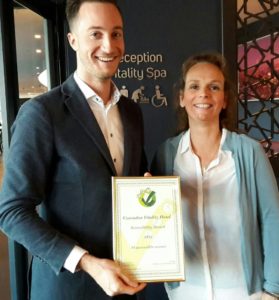
A man holds an award, standing next to ATO founder Marlies van Sint Annaland

ATO founder Marlies van Sint Annaland (right) presenting an award to Corendon Vitality Hotel Amsterdam for outstanding accessibility services

It was a new friendship with a kindred spirit that first opened Van Sint Annaland’s eyes to the carefully negotiated worlds of people with disabilities: “About a decade ago, I met a woman in my neighborhood. She was my age, passionate about travel like me, full of energy like me and she was a free bird, a free mind. We drank coffee and connected easily. The world of ‘accessibility’ or ‘disability’ was completely new to me and I had, as many others, until that moment, never realized what it takes to get through the day facing all the obstacles, misunderstandings, prejudice and (sometimes) unwanted help. I decided to do something about it and learned that out-of-the-box thinking was very helpful.”

In search of a practical solution to the problems she saw, Van Sint Annaland decided to focus on travel. “I learned that the biggest obstacle to overcome is that other people just don’t know how to realize accessibility or where to turn to if they want to know. I thought of traveling and wondered what that world would look like, as in an accessible travel world. Being a big hotel fan, I created Hotelaccessibility.com. In the many talks I had with people with disabilities, I heard the same thing over and over. Accessibility was always a promise, (in hotels) but rarely a given.”

Acquiring and Disseminating Reliable Information

ATO’s chief objective is to connect the consumer with accessibility information that is reliable and visible.  Van Sint Annaland explains that because “there are many online resources on accessible locations or accommodations — mostly operating locally — it is difficult to find your favorite destination and information about its accessibility. Just like in every world – politics, education, travel – there are a thousand ‘islands’ in the world of accessible travel. I want to be the ‘Bridge Builder’. Helping the tourism business where needed and making sure that people with disabilities can wander along all these beautiful ‘islands’ and travel the world.”

She continues, “Accessible Travel Online’s ultimate goal is to connect people with as many beautiful locations on this planet as possible, creating one big travel platform where people with disabilities will find what they need, and what they want. Let’s travel the world! TOGETHER!”

According to the ATO website, newly vetted hotels are added monthly to an already well-researched and sizeable variety At present, the site offers information on accessible hotels in: Africa, Australia and New Zealand, Europe, the United States and Canada, South America and Southeast Asia:  “More countries will be represented on Hotelaccessibility.com every time we set up a new partnership with local travel agents. If you don’t want to miss updates, please subscribe to our news update or follow us on social media via Facebook, Twitter or Instagram.”

Trusted Advisors

To properly vet hotels, Van Sint Annaland relies on a small group of advisors and personal contacts who gather the hotel information ultimately appearing on the site. This differs from the model used by most travel rating services that typically list the experiences of travelers who have stayed in a particular hotel. ATO advisors are selected specially to look for ways in which the hotel serves people with disabilities in its hospitality profile.

Becoming an advisor requires more than a keen interest in world travel. Returning to the company objective of providing reliable information to is customers, Van Sint Annaland selects individuals who bring a personal awareness of just how invaluable

reliable information can be. As she explains, “Experienced travelers with a disability themselves, is the basic starting point to join the ATO team. Our motto is not to talk about disabilities, we talk about abilities. I never ask people why they are in a wheelchair for instance. It’s obvious, right? So, we make sure we can take away barriers and focus on the possibilities. Melanie and Mirjam, who coordinate the HotelCheck procedure, are trained experts in hospitality and are very good in motivating others to share their skills in endurance, positive thinking and helping others. Helma singlehandedly changed the law in the Netherlands, making sure assistance dogs are never to be refused on any property. Representation with advisors in the USA is coming soon.

In describing the feel and function of the website, Van Sint Annaland says that ATO is, above all, a community, a platform where people can share information: “Yes, we allow hotels and accommodations who have ‘passed our test’ to promote themselves on our site. We don’t work with reviews (per se), but we use our (in house developed) HotelCheck ratings. These set an international standard and a universal quality label travelers can rely on.”

Hotels also seem to prefer the HotelCheck method with trained advisors. According to Van Sint Annaland, ATO has been “testing hotels in our region for three years and the feedback from the hotels involved was unanimously the same. All hotel managers valued the time spent with a HotelCheck consultant because it created the opportunity to ask questions and learn how to improve or facilitate accessible amenities or services.”

How the Site Works

As Van Sint Annaland discussed earlier, ATO bridges the international hospitality industry and travelers with disabilities. She goes on to describe how ATO facilitates this relationship: “The key to helping clients Find a Room that Fits their needs is the round-up of the varied, small services that operate in Europe. Ours is a one stop shop …  for example, The Corendon hotel in the Netherlands has been listed  since September 2015 and they won our Accessibility Award 2016 .”

This hotel, whose website is https://www.corendonhotels.com/corendon-vitality-hotel-amsterdam, offers many accessible rooms. She says, “We have worked with the Corendon Vitality Hotel in Amsterdam from the start, before it was built! They have two accessible rooms on each of the seven floors. 

She further advises, “Should clients desire hotel reviews, AccessAdvisr.com, is a standard resource. Co-owner and Managing Director Rob Trent provides a service that effectively complements ATO: AccessAdvisr gives disabled people the opportunity to provide a real-world view of how easy-to-access different places and transport stops are for disabled people. If a place gets a poor review, we’ll feed that back and campaign for better accessibility. If it gets a good review, we’ll feed that back too!”

The Future

Going forward, ATO plans to focus expansion in areas where they have already made successful inroads. But this does not mean that newer inroads will not also be made. In the spirit of its slogan, “Travel without Limitations,” the company has recently begun a U.S. operation to further ease the paths to worldwide travel. In fulfilling her dream, Van Sint Annaland has helped others fulfill theirs. ATO offers a map of possibility for travelers with disabilities, who are well-accustomed to knowing their limitations and then defying them.


online movies 2017

Filed Under: Featured, Profiles in Excellence Leave a Comment

Tags: accessibility, Accessible Travel Online, hotels, Marlies van Sint Annaland, service animals, travel

find this post helpful? Try these:

Default ThumbnailAccessible Gaming: More Than Fun Image of Emily with the Tin Man along with a quote: I'm incredibly moved by what our engineers have created with the talking guide and couldn't be more proud of how the team brought Emily's story to life. - Brian Roberts, Chairman & CEO of ComcastComcast says, “Open Sesame!”
share
  • « Previous Page
  • 1
  • 2

Welcome

Whether you are interested in breaking ground in the market as a company, you are living with disability or love someone who is, we’re committed to keeping you abreast of what matters to people with disabilities—and why—so stay with us.

SIGN UP

Get the latest SMG updates in your inbox!


Categories

  • Featured
  • General
  • Notes from the Founder
  • Profiles in Excellence
  • SMG Tip
  • Video

Archives

  • March 2020
  • February 2020
  • May 2019
  • January 2019
  • November 2018
  • September 2018
  • August 2018
  • July 2018
  • May 2018
  • March 2018
  • February 2018
  • January 2018
  • December 2017
  • October 2017
  • September 2017
  • July 2017
  • May 2017
  • April 2017
  • March 2017
  • February 2017
  • January 2017
  • December 2016
  • November 2016
  • October 2016
  • September 2016
  • August 2016
  • July 2016
  • April 2016
  • March 2016
  • February 2016
  • January 2016
  • December 2015
  • November 2015
  • October 2015
  • September 2015
  • August 2015
  • July 2015
  • June 2015
  • April 2015
  • March 2015
  • February 2015
  • January 2015
  • October 2014
  • July 2014
  • January 2014
  • December 2013
  • November 2013
  • July 2013
  • June 2013
  • March 2013
  • January 2013
  • December 2012
  • October 2012
  • September 2012
  • July 2012
  • April 2012
  • December 2011
  • October 2011
  • August 2011
  • April 2011
  • February 2011

Contact Us

Quick Facts

The disability market consists of 56M people, representing an annual disposable income of $544 billion.

The disability market is more than twice as large as the tween market (20M), and has almost 3X the disposable spending power ($180B).

According to the U.S. Census Bureau, of the 69.6 million families in the U.S., 20.3 million families have at least one member with a disability.

A University of Massachusetts Boston survey found 92% of consumers felt favorably toward companies hiring people with disabilities; 87% prefer to do business with such companies.

By the year 2030, 71.5 million Baby Boomers will be over the age of 65 and demanding products, services, and environments that address their age-related physical changes.

Featured Clients

Darden Restaurants
American Express
AT&T
Sodexo
Bank of America
Wellcare
BlueCross BlueShield
ESPN
Zappos
Nike
Hilton
Get the latest SMG updates in your inbox!

678-805-7091 | info@disability-marketing.com

© 2025 Solutions Marketing Group

| a doodle dog creative website and brand