By Carmen Daniels Jones
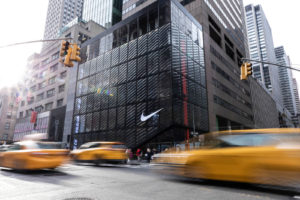
Nike flagship store in New York City
In 2000, the disability community was outraged by a Nike print ad, featuring a shoe called the ACG Air Dri-Goat. The ad ran in national and regional copies of outdoor and backpacking magazines. The copy was intended to be humorous, but it backfired and ran as follows:
Fortunately, the Air Dri-Goat features a patented, goat-like out sole for increased traction, so you can taunt mortal injury without actually experiencing it. Right about now you’re probably asking yourself, “How can a trail running shoe with an outer sole designed like a goat’s hoof help me avoid compressing my spinal cord into a Slinky on the side of some unsuspecting conifer, thereby rendering me a drooling, misshapen, non-extreme-trail-running husk of my former self, forced to roam the Earth in a motorized wheelchair with my name, embossed on one of those cute little license plates you get at carnivals or state fairs, fastened to the back?”
To that we answer, hey, have you ever seen a mountain goat (even an extreme mountain goat) careen out of control into the side of a tree?
Didn’t think so.
It’s OK to pick up your jaw now. Crazy, right? How anyone within Nike or its ad agency thought this was funny is beyond me. The disability community responded by slapping Nike’s wrists with letters, public shaming and protests. The story was covered by media outlets such as Bloomberg and the Wall Street Journal. Nike issued a few apologies and also sent an executive to meet with disability leaders in Washington, DC to smooth things over. On a personal note, I owned Nike stock at the time and sold it. It was my way to quietly rebuke the brand.
Since that time, Nike has evolved. Over the years they’ve been a sponsor of Paralympians. They created the Pegasus Fly Ease, which features a zipper-and-strap system to assist athletes of all abilities with getting their shoes on and off quickly and easily. The company also recently signed Justin Gallegos, the first athlete with cerebral palsy to sign with the company. I’ve been in meetings with Nike representatives and have discussed how they’ve emerged as a disability inclusive brand in product development, partnerships and messaging.
Nike could’ve thrown in the disability inclusion towel after its misstep with the Air Dri-Goat, but they didn’t. They learned, changed and evolved. They’ve demonstrated that while they didn’t initially get it right, they provided their teams to innovate, create and partner. Companies are clamoring to been seen and heard by diverse customers and so many don’t include or engage the disability market. It’s incredibly refreshing that the disability market wasn’t left behind for this company. Well done, Nike.
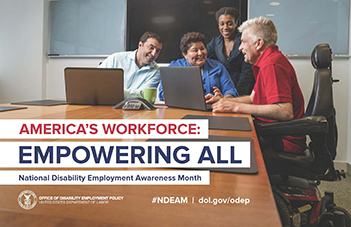 Thirty-two years ago, I was a wheelchair-using college senior at Hampton University in Hampton, Virginia. I knew very little about disability employment or inclusion. I just knew that like many of my peers, I had to get a job. I went through a number of first interviews, two second interviews and didn’t have a job when I rolled across the stage to get my diploma. This pre-dated the Americans with Disabilities Act (ADA) and companies didn’t discuss advancing disability employment the way they do today.
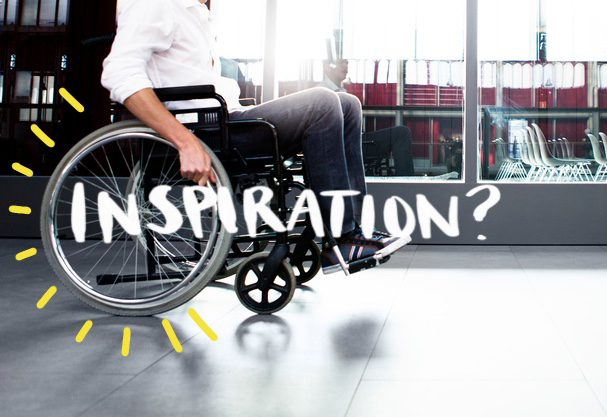 We’ve all seen people with disabilities in movies or commercials where the music and imagery make them seem either super human, brave or courageous. This usually follows themes such as: tragedy to triumph, some sort of athletic fete, or getting into the ‘in’ crowd. The word you’ve heard, and likely have said, is INSPIRATIONAL – the most over-used word to describe people with disabilities. We’ve all heard some variation of these messages: ‘People with disabilities are such an inspiration.’ Or, ‘When I see people like that, it makes me realize I have nothing to complain about.’ Many companies default to this type of messaging, which the disability community has categorized as “inspiration porn.” While well-intended, these types of portrayals can spark significant backlash from the disability community and its supporters.
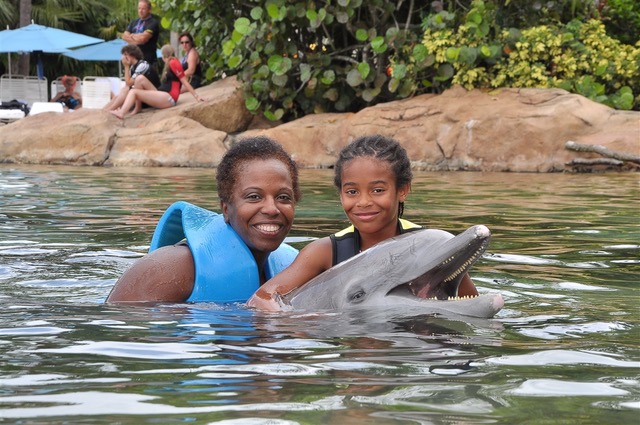 Swimming with dolphins was on my bucket list for a long time, but as a paraplegic I wasn’t sure how this would happen. After some research, I found
  I started Solutions Marketing Group in 1998, when I saw the need for businesses to target people with disabilities, as consumers. As an African-American woman, companies marketed to me, but not as a person with a disability. I determined what services I was able to provide, and made a prospect list of clients to target. I had collateral designed and printed, and I began speaking at conferences to get ‘out there.’