Solutions Marketing Group

Providing clients with innovative strategies that position them to understand, penetrate and retain the disability market.

  • Home
  • About
  • What We Do
  • Blog
  • Learn From Us
    • Boot Camp
    • eBook
  • Contact
  • Home
  • About
  • What We Do
  • Blog
  • Learn From Us
    • Boot Camp
    • eBook
  • Contact

Featured Posts:

SMG March 2020 Update

A Letter from the Founder: How to Reach Consumers with Disabilities

A Letter from the Founder: How to Reach Consumers with Disabilities

Spring Update from Carmen!

Spring Update from Carmen!

Just Say It!

March 1, 2015

By Joan Leotta

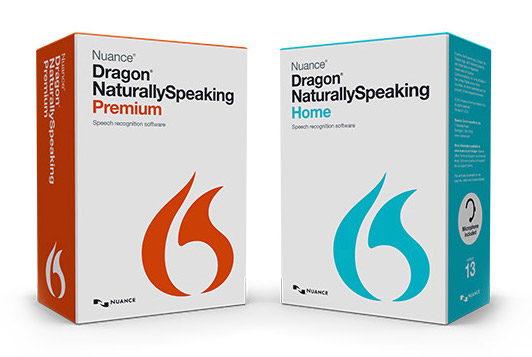
Photo of Dragon Naturally Speaking software packingIn the spring of 2014, Shirley Connolly, writer, editor and Christian romance author, was facing the end of her twenty-year writing career.  “The problems I had been having with my wrists and fingers, especially my thumbs, had begun to increase to where I was finding it difficult to work comfortably on my computer. As a published author, teacher and speaker, I was in a dilemma. My neurologist performed a conductive test which showed I had both chronic tendinitis in my fingers and debilitating thumb arthritis.” After learning of the potential impact on Connolly’s writing career, her Koinonia Community fellowship lifted her in prayer.  Adding works to their faith, the group purchased Dragon NaturallySpeaking 12 Professional for Connolly.

Rather than traditional keyboard stroking, Dragon 12 provides an alternative, allowing Connolly to speak her thoughts.  “I’ve been using Dragon now for several months and appreciate how it quickly recognized my voice after just a couple of weeks.” Connolly uses the software for both writing and editing and has found that it functions effectively even with potentially distracting background noise.

Not only did Dragon NaturallySpeaking restore Connolly’s ability to write with ease, but it also inspired new writing projects.  “I was able to be a copy editor for my critique group of six writers. Editing is trickier but definitely works.”  Just as exciting, Connolly has begun a blog, A Pen for Your Thoughts, which traces her triumphs over the debilitating effects of arthritis.  In a separate blog, Welcome, to My Parlor, she authors devotionals and bible studies. She also found the time to work up the fourth book in her Decisions series, Not Quite an Angel, an 80,000-word book.

Even more dramatic is the story of Travis Roy, whose hockey accident eighteen years ago left him paralyzed. He credits Dragon software with saving his life intellectually and making it possible for him to earn a living. Using Dragon to write his papers, he graduated from Boston University and went on to found the Travis Roy Foundation which to date has raised over $5 million to help other people with spinal cord injuries. He says, “Dragon is one of the most critical resources I have that enables me to live a full and productive life.”

Through his foundation, Roy also helps other spinal cord injury survivors secure employment. “We provide these applicants with computers equipped with Dragon NaturallySpeaking. It not only stimulates their minds, but they can also virtually leave their room and explore the world. You just can’t put a price tag on what that does for someone.”

History of Nuance

Nuance, the maker of Dragon NaturallySpeaking and Dragon Dictate for Mac, was incorporated as Visioneer, Inc. in March 1992. Through December 1998, the company developed and sold scanner hardware and software products. On January 6, 1999, Visioneer sold the hardware business and the Visioneer brand name to Primax Electronics, Ltd.On March 2, 1999, Visioneer acquired ScanSoft, in a cash election merger, from Xerox Corporation. The corporate entity “Visioneer” survived the merger, but changed its name to “ScanSoft, Inc.” On October 18, 2005, the company changed the name to “Nuance Communications, Inc.” The Dragon line of software for speech recognition originally came to market in the late 1980’s, and has been innovated upon and brought to market over the last decade by Nuance.   The company’s global headquarters is in Burlington, Massachusetts.

In July of 2014, Nuance released version 13 of Dragon NaturallySpeaking, just a few short months after releasing version 4 of Dragon Dictate. We spoke with Nuance’s Peter Mahoney, Chief Marketing Officer and General Manager of the Dragon business, for more information about the Dragon line of products. The following Q and A discusses the company’s commitment to creating a product that will improve everyone’s quality of life and make it possible for people with disabilities to compete effectively in the modern workplace‎.

Q. For whom did Nuance design these speech software products?
A. Dragon NaturallySpeaking for Windows and Dragon Dictate for Mac are designed to help anyone who uses a computer to reach their full potential by using the power of speech recognition technology to talk rather than type. Our customers include a wide range of people including business professionals, educators, and students as well as people who have difficulty using a mouse and keyboard, such as people with physical or cognitive disabilities. We have always worked closely with direct customers and with partners in the assistive technology community, and have incorporated feedback with respect to their needs into our Dragon products.

Q. Do you have people with disabilities on staff? Do you work with people with disabilities to improve the product?
A. We receive a lot of input from people inside the accessible technology community, including a very large and active set of customers who provide us with regular feedback on our products. We use that feedback to continually improve the usability and features across all of our user communities.

Q. Do you consult with any disability organizations for product improvement? For instance, to determine ease of its use and to improve the product?
A.  We have a very active network of value-added resellers – many of them who are dedicated to serving people with disabilities. Those partners provide very important feedback into our product requirements. We also have a close relationship with the Easter Seals Assistive Technology Center in Boston. They have provided us with significant feedback over the years.

In Dragon 13 for example, we added WAI-ARIA (Web Accessibility Initiative – Accessible Rich Internet Applications) support based on the feedback from the assistive technology community. WAI-ARIA describes how to add specific metadata to HTML content in order to make user interface controls and dynamic content more accessible. For example, with WAI-ARIA it is possible to identify a list of links as a navigation menu and to state whether it is expanded or collapsed.

Q. What feedback have you received about the utility of your product for people with disabilities? People with visual disabilities?  People with dexterity disabilities?
A. For people with physical upper limb disabilities related to injury, RSI, arthritis, etc., that make it difficult or impossible to type, the feedback has been overwhelmingly positive, as it has enabled this group of people to either return to work quickly after an injury, or be more productive on their computers on a daily basis. Similarly, for people with learning disabilities, dyslexia, or specific autism spectrum disorders that make it difficult for them to type what they want to write or spell, they are able to verbalize what they would like to write.

For people with visual disabilities, Dragon can help with text-to-speech capabilities, by having portions of text read back to them. Also, Dragon has transcription capabilities that can allow someone to record their voice electronically and have their speech converted into a document at a later time. There is a wide range of visual disabilities, and there are assistive tools in the market specifically designed to enable people who are blind or otherwise visually impaired. We recommend that anyone with visual disabilities evaluate what their requirements might be and consider what solution is the best for them.

Dragon is a life-changing product for accessibility. Dragon gives people back the ability to write and be productive in their jobs, stay connected with friends and family, or simply have access to a creative outlet for writing thoughts, poems, or stories. The stories we receive from our Dragon community on how Dragon has positively impacted their lives are uplifting. Here is one recently posted reflection written by Travis Roy, a former Boston University hockey player whose life was changed forever in the first 11 seconds of his first college hockey game.

Q. Did you identify a key disability market to focus on when developing the product?
A. Dragon has been a very successful product for many types of accessibility challenges, particularly people with physical upper limb/hand disabilities related to typing and using the computer mouse, such as arthritis or repetitive stress injuries like carpal tunnel. Customers are able to use their voice to entirely replace or minimize keystrokes or movements using their keyboard and mouse.

Dragon has also been an incredibly powerful tool for people with learning disabilities or dyslexia where writing, spelling and typing can be frustrating or difficult. With Dragon, you do not have to worry about the mechanics of typing and spelling that can slow you down as it allows you to communicate what you are thinking. Words that appear on the screen when you talk are typed out and automatically spelled correctly so these users can focus completely on getting their thoughts out.

Training on and Using Dragon

Q. What accessories does a person need to use the software?
A. As part of the newly developed software, Dragon NaturallySpeaking 13 requires fewer, if any accessories for efficient use. Dragon NaturallySpeaking 13 must be paired with a compatible Windows computer and can work with the built-in microphone available in many of the latest Windows laptops and tablets. The boxed versions of Dragon NaturallySpeaking 13 and Dragon Dictate for Mac, version 4 also include a noise-cancelling USB headset microphone.  Alternate options include using a smartphone as a wireless microphone, or using a Bluetooth wireless microphone. Additional microphones are available for purchase from our website or from authorized partners.

The transcription feature is also compatible with an auxiliary digital voice recorder — bundled with the Dragon Dictate for Mac, version 4, Mobile edition or Dragon NaturallySpeaking 13 Premium Mobile edition — which is available for purchase. You can alternately use other digital recording devices — such as a recording app — that can be used with many iOS or Android mobile phones.  View a list of Nuance-approved headsets and digital voice recorders.

Price and System Requirements

Q. Can you compare the different editions of the product now available?
A. Dragon Dictate 4 is our product for Mac users.
Dragon NaturallySpeaking 13 for the PC offers several editions including Home and Premium for the consumer and Professional and Legal for the enterprise or legal industry. Professional and Legal editions for example, have features that make it easy to deploy, maintain and share configurations among multiple Dragon users in the corporate environment. Learn more about Dragon versions and features.

Q.What is the price range for the product?
A. The Dragon NaturallySpeaking 13 product family has a range of options at different price points for both consumers and business professionals – find out which edition is best for you. Please visit http://shop.nuance.com for our Nuance store for various edition and pricing options.
(Note: Prices range from under $100 for home versions to $800 for sophisticated versions designed for professionals, including lawyers.

Q. How long does it take to train the program to understand your voice?
A. With Dragon NaturallySpeaking 13, there is no training required, just a quick microphone check. With Dragon Dictate 4 for Mac, the user will need to read a short passage in order to train the program after product installation. Both products can be up to 99% accurate without further training.

With both products the user has the option at a later time to enhance accuracy by doing additional training, have Dragon learn words from documents, or add specific words or phrases to word lists that you use. Dragon not only delivers high speech recognition accuracy right out of the gate, but it gets smarter as it learns the words and phrases that you use the most, spelling even difficult words and proper names correctly. If you have other questions you can consult the website for further training and support.

Q. What training and product support do you offer to regular customers?
A. There are readily available support resources available at the Dragon support page, including feature videos, feature documents, quick start guides, cheat sheets, user guides and workbooks. There are also technical support articles and a searchable knowledge base. Furthermore, Dragon user support forums can be found on popular social media sites that connect the Dragon community. We also have customer and technical support available via phone or through our customer portal.  We offer an option to purchase an introductory training video as a DVD or online through our Nuance Training portal.

Finally, within the Dragon products themselves, customers are offered an interactive tutorial upon installation of the product. At any time, they can pull up a specific Help topic or have a sidebar or “Learning Center” available on the desktop screen.  This extension dynamically changes and offers command choices depending upon the application that the customer is using. Our goal is to have Dragon up and running quickly so that it can provide immediate service, right out of the box.

The Future

Q. What do you think the future of the product will be?
A
. Nuance believes that speech — as a key mode of input — is the future of desktop and mobile devices. Nuance continues to enhance the accuracy and speed of our products, leveraging state-of-the-art and proven speech recognition technology.  Our software also includes enhanced features that offer the convenience and flexibility of voice recognition technology to our customers.

Nuance has become the gold standard for powering voice recognition and natural language interactions. We have voice technology in consumer devices such as smartphones, book readers, navigation systems, televisions, automobiles and desktop computers. We power accessible voice programs in enterprises such as IVR (Interactive Voice Response) systems.  Nuance products are helpful for everyday interactions including customer service assistance or collecting corporate directory information. These services extend into specific industries, including the healthcare, legal, and financial domains.

To learn more, contact:

Nuance Communications, Inc.
Worldwide Headquarters
1 Wayside Road
Burlington, MA 01803
United States
Tel: 781-565-5000
Fax: 781-565-5001


Filed Under: Profiles in Excellence Leave a Comment

Tags: assistive technology, Dragon Naturally Speaking, Nuance

find this post helpful? Try these:

No related posts.

share

SMG Tip: Communicate Authentically

February 17, 2015

Companies that are champions of multicultural marketing do their homework to understand how to create resonant messaging that inspires consumers to respond by liking a page on social media or purchasing products in the store or online. Their ads tell consumers how the products can be a solution for avoiding pain or deriving pleasure. Messaging to people with disabilities and their families is no different.

In order to effectively connect with consumers with disabilities and their families, what’s conveyed must be clear, inclusive and highlight relevant feature that address barriers. Most importantly, it must be honest and authentic, as consumers are very discerning at identifying companies that lack a sincere commitment to the market. SMG’s clients, that have been the most successful, have used our recommended approach to developing messaging:

  1. Interest/Inspirational – This creative approach is intended to leverage emotions and generally strongly appeals to the general market.
  2. Integrated – Includes messaging that integrates the individual with a disability as just one of the employees/friends/family members. They aren’t ‘special’ or patronized in any manner.
  3. Feature Focused – This approach to creating messaging highlights valuable features that may appeal to the market. Many of SMG’s clients utilize this approach.

Within the past 2 years there’s been a rising trend to include disability themes in commercials, digital and social media, fashion and in print. Follow the leadership of Duracell, who featured Derrick Coleman of the Seattle Seahawks, the first Deaf player in the NFL who was Super Bowl bound. Guinness Beer’s commercial that included a group of able-bodied athletic men playing wheelchair basketball with their friend who used a wheelchair full-time, received millions of YouTube views and critical acclaim. Retail giant, JC Penney included mannequins that were taken from actual molds of people with disabilities as part of its ‘When it fits, you feel it campaign.’ The company received acclaim from the mainstream and fashion media for being inclusive. The key to success is allowing your brand’s essence to connect with the market.

If you are interested in learning how to communicate your company’s commitment to the disability market in an authentic way, leading to building a strong relationship with consumers, contact the Solutions Marketing Group at info@disability-marketing.com.

Filed Under: SMG Tip Leave a Comment

Tags: communication

find this post helpful? Try these:

Default ThumbnailSMG Tip: Communicate Authentically
share

SMG Tip: Retaining the Disability Market

February 3, 2015

Has your company outlined and initiated a formal customer retention strategy for consumers with disabilities?

In a study by Harvard Business School, it was found that increasing customer retention by even 5% can increase profits between 25-95%. And yet…Forrester found that 70% of CMOs did not list retention as a top priority.

There are very few general market companies, that have developed a robust customer retention strategy for the disability market.   That provides an amazing opportunity to make the competition irrelevant and opens a clear path to develop one.

SMG offers the following customer retention strategies that will be a game changer for boosting sales, loyalty and brand equity.

  1. Tell: Companies that are seriously targeting consumers with disabilities tell their story. They weave together the different lines of business – HR, facilities, technology, compliance, product and services, corporate giving, marketing, and advertising around senior level commitment and share their achievements. And, they don’t share this one time during National Disability Employment Awareness Month, but throughout the year and in various forum. Our most successful clients have developed an integrated strategy that showcases the business impact of the disability market.
  2. Capture: In our research, consumers with disabilities have indicated they are willing to provide contact information with a company if they know it will enhance customer service. They’ve also indicated that they want their information to only be used by the company they’ve provided it to.   It’s best to capture contact information at events, inbound/outbound call centers, or on a customer review site. Capturing this information provides your company with a cost-effective and efficient way to target consumers with disabilities. This platform will allow you to obtain feedback, announce special offers or events.
  3. Touch: People with disabilities respond well to companies that consistently reach them. Direct mail, targeted emails with special offers, follow up calls after a purchase, blogs, social media, at events or value-added information, resonant messaging, and exceptional customer service gets their attention. Frequent ‘touches’ not only demonstrate commitment, it keeps your company top of mind.
  4. Research: Lastly, we recommend that research should also be completed at the beginning and end of a project to inform how to best attract customers, why they are buying, and to understand why they are leaving.

If you’re interested in learning more about developing customer retention strategies for the disability market, contact Celeste Beaty at cbeaty@disability-marketing.com.

Filed Under: SMG Tip Leave a Comment

Tags: customer retention

find this post helpful? Try these:

No related posts.

share

SMG Tip: Penetrating the Disability Market

January 27, 2015

Companies that successfully reach consumers with disabilities understand that it requires commitment, discipline and strategy. The truth is that there is such a barren landscape of companies that are speaking to them directly, that any company that is serious about penetrating the market has the opportunity to make the competition irrelevant. These disability-savvy companies understand that moving beyond understanding to market penetration requires well-developed tactics. The SMG Team has developed a quick list of tactics that change the culture and impact the bottom-line:

1. To Keep Get the Consumer with a Disability, Keep it Simple

Most companies get into a quagmire about what to offer and what to say to consumers with disabilities. After the research has been completed and your company understands key drivers for purchase decisions, create an efficient path for consumers to navigate to help them understand how their needs will be met, communicating with them consistently and minimizing the number of information sources consumers must touch while moving confidently toward a purchase. We’ve found the most successful brands achieve this by personalizing the route. One way to personalize this process is to have customer service staff that understands how products and services are used by people with disabilities.

2. Offer Value

In most instances, people with disabilities, and families with a disabled child, live financially below their typical peers. They have to make their dollars stretch among the basics, and have medications, therapies and medical supplies that also need to be purchased. Companies that simplify the purchase process, and offer bundled packages, incentive discounts and additional value will win the market.

3. Be Consistent

The general rule is that a prospect has to have 7+ interactions with a company before making a purchase decision. Seven! That means that companies have to develop an integrated strategy with multiple touch points with consistency to make an impact. There can no longer be limited discussion about reaching people with disabilities in July (anniversary of the Americans with Disabilities Act) or October (National Disability Employment Awareness Month). It must consistently happen, with resources, all year long.


To learn more about how your organization can penetrate the disability market, contact info@disability-marketing.com.


Filed Under: SMG Tip Leave a Comment

find this post helpful? Try these:

No related posts.

share

Smooth Sailing

January 15, 2015

By Joan Leotta

Photo of Oasis of the Seas, a Royal Caribbean ship

Royal Caribbean’s Oasis of the Seas, it’s largest ship, which has 46 accessible rooms.

Royal Caribbean International, one of the brands of Royal Caribbean Cruises, Ltd., has recently revealed a sweeping new program to make family vacations that meet the needs of all family members, including those on the autism spectrum, a reality. The cruise line has the certification of being “Autism Friendly.” Royal Caribbean has been working toward this goal for many years, wanting to go beyond compliance with the law to truly serve passengers with disabilities of all types.

Ron Pettit, Manager of Access Compliance says, “As a brand we have learned to offer modifications of many activities to make the cruise experience fun for the entire family. Since 2007 we have worked to develop products and services for guests with autism. We were certified as the first Autism Friendly cruise line in February 2014. We now have many products and services to meet the needs of guests with autism and other disabilities – developmental and physical. We are a family cruise brand, known for multi-generational cruises. Even before we focused on autism we already had many programs offering accommodations for passengers with visual, hearing and mobility needs. For example, there are “relief areas” for people with service dogs, large print menus, amplified phones and sign language interpreters. We have boarding assistance, accessible staterooms with wider doors and grab bars. Every one of the 22 ships in our line, Royal Caribbean International, has designated accessible rooms, a total of 487 in all ships combined. Our largest, Oasis of the Seas, has 46.”

Certification

The February 2014 certification was awarded by Autism on the Seas (AotS), a Connecticut–based organization that is a Developmental Disability Service Supplier to the Cruise Industry as a whole. Awarding certification status to the entire line of Royal Caribbean International ships is based on their meeting seven criteria, including training for staff, offering programs and dining area options that meet the needs of families with an autism spectrum member and more.

Mike Sobbell, Founder and President of Autism on the Seas, has stated that awarding the certification to Royal Caribbean marked a “turning point” in the travel and cruise industry toward the effective accommodation of families impacted by autism.

Doing Good Makes Good Business Sense

“Accessibility is about accommodating all disabilities,” says Pettit who adds many of the company’s executives were very supportive of the program and helped with the development of the special programs for passengers with autism.”  We received increased input in our reports to our contact centers for activities to support people with autism and other developmental disabilities. As a result, we began to pay extra attention and the program plans began,” says Pettit. He adds, “When the idea first came up, it was a very simple concept. We saw several land based hotels and theaters that made their products and services autism friendly and we wanted to replicate that same kind of success and awareness to the Royal Caribbean International brand.”

Some of the most supportive executives were Lisa Lutoff-Perlo, Executive Vice President of Operations, Royal Caribbean International, Vicki Freed, Senior Vice President of Sales, Trade Support and Service, Royal Caribbean International and Carlos Leyva, Vice President of Trade Support and Services, Royal Caribbean Cruises Ltd.

Pettit notes, “The entire company is behind this. Many autism communities have tweeted and posted their support for this effort.” He adds, “This is a growing market. According to our data, one of every 68 children in the United States alone has been diagnosed with autism, which translates to approximately two million people. When you add the family members that brings the total up to about ten million people, a very large market. And much of it may be new business. Many families with children with autism might not even have taken vacations or thought about cruising, as a family, before our program came to their attention. On our cruises parents can choose from a list of tailored activities designed to make the cruise experience appealing for the whole family.”

Specific Types of Activities Offered

Pettit says, “We offer many elements like priority boarding, gluten free meals (and meals that are dairy free), and accommodations in the Adventure Ocean Programs.” The company’s Adventure Ocean and Teen Program caters to guests under 18 years old.  There are six tiers of programming for these younger guests, with all programs being led by college-accredited counselors. The activities are offered from 9 a.m. to 2 a.m., which provides parents with a great break to enjoy their holiday.  The activities are grouped by ability, and not strictly age. Examples of one of the specific program refinements, which may appeal to families, are films are presented in an environment with low lighting and volume. Guests are also able to freely talk and walk around during the films. Movies are offered on all autism group cruises and cruises when there are at least five children with a disability onboard. Pettit noted that the movie sessions were beta tested on Oasis of the Seas in 2013 and got great results.

The full range of activities offered can be found at www.RoyalCaribbena.com/AutismFriendly.  The dates and times of these activities will be highlighted in the Cruise Compass Program.

“The young passengers with autism are not in a separate section.  They are integrated into the programs we have, and our staff has been trained to provide a wonderful experience for the child, and his/her family.  We have already been very successful accommodating passengers with disabilities.  The Autism Friendly certification builds on our success. We recognize that a family with a child with a disability is on duty 24/7 so it is extra nice for the parents to be able to participate in activities with their child, but also be able to have a dinner by themselves.

Pettit says, “Many of the things we do every day are all complimentary, with no additional charge for families and their loved ones who have disabilities. The one thing we do not have is additional staff to serve guests with autism who are over the age of 18. There are group cruises that often offer additional staff that may be right for these families to use.”   Pettit says these companies who offer group cruises with extra staff often work with the cruise line (see below).

Training and Planning are Key

Royal Caribbean is one of the first cruise lines to offer training for travel agents. “Over eighty percent of our cruises are booked with travel agents and we tell our agents about the accessible options through a series of webinars called the University of WOW including a course on their autism-friendly program in their on-line training program/.. We developed this program and are making an effort to communicate to the public to let them know that this option is here. We already are doing many of the things that the certification required and so we wanted to get recognition for our efforts,” says Pettit.

He adds, “We continue to progress. Right now we are at the bronze level of certification and that means we have it all in place and the next level, the silver level, includes training of our Adventure Ocean staff in awareness. We plan to finish that by the end of this year.  Adventure Ocean staff will have advanced training, next year and the last training is a hands-on for youth staff and a few other select groups. Training will be very specific.”

The Future

When Pettit was asked if the company was finished with its over-the-top accessibility features, the answer was a resounding ‘NO.” With the next tier of certification to accomplish, and additional training for staff, the company aimed to have this all completed by end of 2014. He added, “As we launched our initiative, we saw all the wonderful and positive feedback from our guests and the autism community. One in particular stood out to me:

“I just want to thank you for your efforts to become an expert in dealing with autistic children. My wife and I have adopted several children with special needs, most on the Autism spectrum and this is truly an amazing thing. Thank you so much for this as a dad.” – James D.

Additional Resources

For more information about the program, prospective guests can contact Royal Caribbean’s Access Department at (866) 592-7225 or send an e-mail to special_needs@rccl.com. Learn more about Royal Caribbean’s committment to accessibility at www.RoyalCaribbean.com/AccessibleSeas.

A sampling of travel services that work with RCL:

  • Autism on the Seas: www.autismonseas.com – (800) 516-5247
  • Autism Adventure Travel: www.austismadventuretravel.com – (941) 979-2663
  • ASD Vacations: www.asdvacations.com – (203) 750-0000

Filed Under: Profiles in Excellence Leave a Comment

Tags: autism, Royal Caribbean

find this post helpful? Try these:

No related posts.

share
  • « Previous Page
  • 1
  • …
  • 13
  • 14
  • 15
  • 16
  • 17
  • …
  • 20
  • Next Page »

Welcome

Whether you are interested in breaking ground in the market as a company, you are living with disability or love someone who is, we’re committed to keeping you abreast of what matters to people with disabilities—and why—so stay with us.

SIGN UP

Get the latest SMG updates in your inbox!


Categories

  • Featured
  • General
  • Notes from the Founder
  • Profiles in Excellence
  • SMG Tip
  • Video

Archives

  • March 2020
  • February 2020
  • May 2019
  • January 2019
  • November 2018
  • September 2018
  • August 2018
  • July 2018
  • May 2018
  • March 2018
  • February 2018
  • January 2018
  • December 2017
  • October 2017
  • September 2017
  • July 2017
  • May 2017
  • April 2017
  • March 2017
  • February 2017
  • January 2017
  • December 2016
  • November 2016
  • October 2016
  • September 2016
  • August 2016
  • July 2016
  • April 2016
  • March 2016
  • February 2016
  • January 2016
  • December 2015
  • November 2015
  • October 2015
  • September 2015
  • August 2015
  • July 2015
  • June 2015
  • April 2015
  • March 2015
  • February 2015
  • January 2015
  • October 2014
  • July 2014
  • January 2014
  • December 2013
  • November 2013
  • July 2013
  • June 2013
  • March 2013
  • January 2013
  • December 2012
  • October 2012
  • September 2012
  • July 2012
  • April 2012
  • December 2011
  • October 2011
  • August 2011
  • April 2011
  • February 2011

Contact Us

Quick Facts

The disability market consists of 56M people, representing an annual disposable income of $544 billion.

The disability market is more than twice as large as the tween market (20M), and has almost 3X the disposable spending power ($180B).

According to the U.S. Census Bureau, of the 69.6 million families in the U.S., 20.3 million families have at least one member with a disability.

A University of Massachusetts Boston survey found 92% of consumers felt favorably toward companies hiring people with disabilities; 87% prefer to do business with such companies.

By the year 2030, 71.5 million Baby Boomers will be over the age of 65 and demanding products, services, and environments that address their age-related physical changes.

Featured Clients

Darden Restaurants
American Express
AT&T
Sodexo
Bank of America
Wellcare
BlueCross BlueShield
ESPN
Zappos
Nike
Hilton
Get the latest SMG updates in your inbox!

678-805-7091 | info@disability-marketing.com

© 2026 Solutions Marketing Group

| a doodle dog creative website and brand