Solutions Marketing Group

Providing clients with innovative strategies that position them to understand, penetrate and retain the disability market.

  • Home
  • About
  • What We Do
  • Blog
  • Learn From Us
    • Boot Camp
    • eBook
  • Contact
  • Home
  • About
  • What We Do
  • Blog
  • Learn From Us
    • Boot Camp
    • eBook
  • Contact

Target Scores Bulls-Eye Again

December 13, 2017

By Joan Leotta

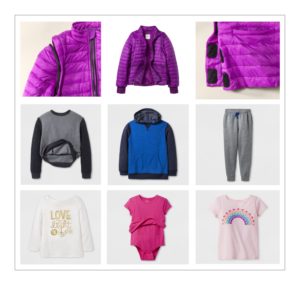
examples of Cat and Jack adaptive clothingLast summer, Target launched the children’s clothing line, “‘Cat & Jack,” a fun blend of creativity and functionality designed to meet the needs of modern families. This past fall (2017), Target expanded the line to include a selection of stylish adaptive pieces for toddlers and kids living with disabilities.

In describing this innovative launch, Julie Guggemos, senior vice president of Product Design and Development at Target, stated, “It’s our goal at Target to always make sure we have products that fit our guests’ needs, and all at a reasonable price point. We heard from our guests – and members of our own team—that there’s a need for adaptive clothing for kids that is both fashionable and affordable, so we set out to create exactly that.” She added, “since launching sensory-friendly apparel earlier this year and receiving such positive guest feedback, we’re now focused on continuing to evolve and expand Cat & Jack to meet the needs of even more of our guests.” Target spokesperson Meghan Roman further explained the vision behind the new line of clothing and the role Cat & Jack plays in the company’s overall commitment to shoppers with disabilities.


SMG: What made Target aware of the need for adaptive clothing?

Roman:  Target heard from real kids and parents – and members of their own team – that there’s a need for adaptive clothing for kids that is both fashionable and affordable. It all started when Stacey Monsen, a design director for AVA & VIV, Target’s own plus size line brand, and her teammates saw an opportunity to design pieces that are more accommodating for all guests–including their own kids. With this insight, Target set out to introduce a limited selection of sensory-friendly and adaptive kids’ clothing, within Cat & Jack, that’s affordable and offers kids stylish options to feel comfortable and confident enough to take on the day. Since the product launch last year, real kids, including those with sensory processing sensitivities, have played a key role in the development of the Cat & Jack brand. The feedback and insights Target gathered from this unique demographic were so invaluable that we have continued to tap kids from season to season to ensure we are meeting the wants and needs of our guests.

SMG: What items are available now?

Roman: The adaptive assortment features 40 items for boys and girls, including puffer jackets, long-sleeve tees, short-sleeve tees, hooded sweatshirts, leggings and bodysuits. Cat & Jack’s selection of adaptive apparel features details like outerwear created with zip-off sleeves and side and back openings to help make dressing easier for kids who are lying down or sitting. We also offer footless sleepwear to minimize discomfort for children who have sensory processing sensitivities or for those who wear additional supports on their legs and feet; we carry clothing with hidden openings that allow for abdominal access as well as diaper-friendly leggings and bodysuits.

SMG:  Are (and were) disability organizations and people with disabilities involved with developing and marketing this line?

Roman:  In addition gathering feedback from our guests and members of our own team, Target’s design team met with several organizations such as Pageant of Hope (a pageant for girls with special needs and challenges), Mind Body Solutions (a non-profit specializing in adaptive yoga), The National Federation of the Blind Minnesota and The Minnesota Autism Center, a group which facilitated our understanding of how clothing can help meet the everyday needs of children with disabilities and sensory processing sensitivities.

SMG:  Are the clothes available online, in stores or both? What are the sizes and price points?

Roman: The Cat & Jack adaptive apparel assortment is available exclusively on Target.com. Based on the current brand styles, Target’s internal design team created the 40-item assortment with features like side and back snap and zip closures and hidden openings for abdominal access, all in an effort to make getting dressed easier for everyone (kids and parents!). Cat & Jack adaptive apparel comes in sizes 2T-5T (Toddler) and XS-XXL (Big Kids). Prices range from $4.50 to $39.99, with most items priced at under $19.99.

The Target.com website boasts a unique online experience with online sizing tools meant to make it easier to find clothing that fits the specific needs of children. The online experience also showcases the design attributes and provides inspiration of how to mix and match the styles.

SMG:  Cat & Jack is available exclusively for children right now. Will adult clothing be available at a later date?  

Roman:  Yes, the line is only for children at present. Target will continue to evaluate all of our apparel assortments from kids to adults to ensure that guests feel welcomed and inspired by our products.

The best way to summarize our plans for the future of Cat & Jack is to quote Stacey Monsen, the Target design person who initiated our involvement in this line:  “The Target team has immense passion and collective knowledge, and I love that we’re using it to develop products and solutions that will change people’s lives. My goal is to keep being an advocate, for my daughter and for others.”


Cat & Jack products are available now on Target.com.
Filed Under: Featured, Profiles in Excellence Leave a Comment

Tags: adaptive clothing, Cat & Jack, target

find this post helpful? Try these:

A Caroline Cart from TargetFree to Shop: TARGET’S Adoption of Caroline’s Carts Heralds a New Era in Inclusion Accessible Travel Online logoFinding a Room that Fits
share

Free to Shop: TARGET’S Adoption of Caroline’s Carts Heralds a New Era in Inclusion

September 7, 2016

By Joan Leotta

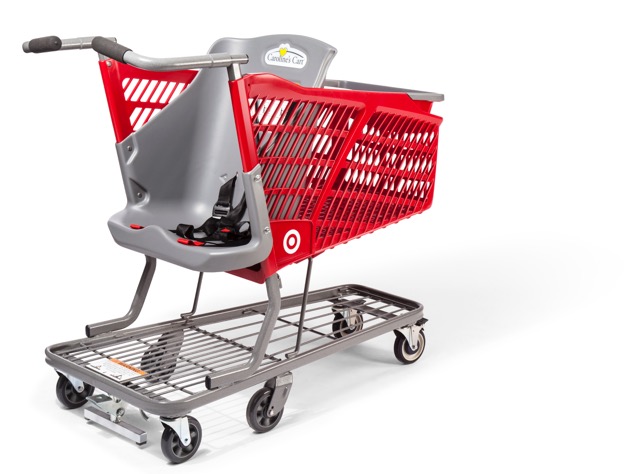
A Caroline Cart from TargetBefore Caroline’s Carts, a trip to the grocery store or a quick dash to pick up household or clothing items could be a logistical nightmare for families with a special needs child or an adult family member who cannot be left alone. By making it possible for these families to enjoy one more bit of normalcy in their lives, Drew Ann Long, inventor of  Caroline’s Cart and the mother of a child with Rett Syndrome, has now changed the dynamic of that everyday experience.

Since its introduction to grocery stores in 2012, Caroline’s Cart has become a nationwide phenomenon. Target Corporation is the first national retailer store to offer this convenience to its customers, thus extending the “normal” shopping experience beyond groceries to electronics, home goods, housewares, hardware, clothing, and other categories. Each and every Target store makes at least one Caroline’s Cart available to much positive reception. Target spokesperson Kristy Welker comments, “We’re thrilled that Caroline’s Cart has made shopping easier for guests and we appreciate that our guests share photos of their shopping experience on their social channels. We’ll continue to put our guests at the center of everything we do to improve the shopping experience.”

How and Why Did Target Adopt These Carts?

Welker explains, “a former Target team member with a special needs child informed Target’s Store Operations team about Caroline’s Cart”. So, it was actually word of mouth that first stimulated Target’s interest in Drew Ann Long’s invention. Welker continues, “Additionally, some guests had notified our Guest Relations team about the carts. These suggestions prompted us to explore adding Caroline’s Carts to Target stores to positively impact guests’ shopping experience.”

The initial test drive, which took place in February 2015, was an immediate success. Welker shared that “after receiving positive guest reaction, we decided to add the carts to nearly all Target stores by March 19, 2016.” Each of the 1,780 Target stores has at least one Caroline’s Cart available. More can be added as individual stores anticipate customer needs.”

Development of the Cart

Drew Ann Long, developer and inventor of Caroline’s Carts, is the stay-at-home mother of Caroline, her special needs daughter, A resident of Alabaster, Alabama, Long first realized the need for these carts eight years ago when Caroline turned seven and as Long says, “was becoming too large for supermarket carts.”. What Long foresaw was not pleasant for her or her daughter: She says, “Imagine not being able to take your child to the grocery store.” Rather than surrender that basic yet meaningful activity, Long decided to make the world better for her family and for families like hers. Now imagine something that will allow you to continue to take your child with you. Such experiences, shopping at the grocery, in stores like Target, give families a sense of normalcy, they allow a family that has a child with a mobility disability or someone who has a family member with Alzheimer’s or even Autism to have the same typical shopping experience as that of their neighbors.”

Long notes that the first cart shipment, delivered to a local mom and pop grocery store, came on October 9, 2012 – Caroline’s birthday. The initial enthusiastic feedback from the store owners proved that Caroline’s Carts were an effective, pragmatic answer to a widespread challenge. Buoyed by this success, Long approached Technibilt, one of the nation’s largest grocery cart manufacturers.

Technibilt spokesperson Alice Little recalls that, “once Drew Ann Long met with us, she knew she wanted to partner with us and there was no stopping her. She had the vision and her presence in this project has been huge from the beginning until the present! Drew Ann helped to convince us that the need was there and that once the product was available that families with special needs older children and adults would jump in with both feet. Once the carts were tested and the first carts showed up in the stores, these families sitting quietly with their need came out of the woodwork.”

To generate interest in Caroline’s Cart throughout communities and around the country, Long met with local disability organizations while Technibilt spread the word among its client list. In fact, as Little notes, “Several groups have contacted us to endorse the cart. The largest group was Easter Seals. We were the very first product to bear the Easter Seal Logo. Caroline’s Carts also received the da Vinci Awards®, a prestigious, international forum celebrating the most innovative developments and research in all fields of assistive and adaptive technology.

Seeking to expand the carts’ availability, Technibilt has reached out to every major retailer in the U.S. and Canada as well as many smaller chains and local business operations. Little explains that while the manufacturer has “received a wonderful response to the product, Technibilt sales is not the hero in this story. The real heroes are all of the families who, once they heard about the product and saw it in use, contacted their own local stores and asked. ‘Can we get a Caroline’s Cart in our store?’ The key is that it is their store, where they shop… they will be faithful shoppers in their stores! They got the word out in their hometowns as well as on their social media accounts.”

The Cart’s Success

According to Technibilt, the company receives “100’s” of emails per day from cart users… they are wonderful emails… they tell their story to us and how the cart has changed their lives. We love these emails and answer every single one of them!”

Target’s Welker says that company has experienced the same enthusiastic gratitude. “The feedback that we’ve been hearing is overwhelmingly positive. Guests appreciate the ease that the carts offer.”

Getting Carts into More Stores

The ultimate goal of any business is economic viability. Technibilt’s Little says, “We knew Caroline’s Cart would sell. We knew if we built it and enlisted Drew Ann Long to help us market the cart, it would be a success, that  Caroline’s Cart was going to be an award winning product.” She points out that the carts are also helpful for people with family members who other conditions that do not allow them to simply walk alongside another shopper and who also cannot operate the motorized carts.

Caroline’s Carts can be found in every state except Hawaii  at Kroger, Publix, Hannaford, Food Lion, Whole Foods, Wegman’s and more. Having already expanded to Canada, Technibilt anticipates also debuting the product in Germany, Russia, Egypt, Spain, the United Kingdom and Australia. www.carolinescart.com offers a list of store locations where the carts are currently available. With the excitement of this product expansion, it is important to note that not all companies who provide the carts have them in all of their stores.

Some grocery stores still do not carry the carts at all. Long encourages families to speak up: “If you do not see a cart in a store, ask about it. If the store has a fun cart (shaped like a truck or car for children to use), or an electric scooter, you can point out to the manager that Caroline’s Carts are for those who cannot drive the scooters. If they have made one kind of provision, then they should be willing to provide an equal opportunity shopping experience to the underserved market of families with persons with a disability who are still out there.”

The Cart’s Facebook page is a great place to follow the progress of this dynamic invention as it continues to impact the world of inclusion. This page is also be a resource for families seeking to build advocacy networks, encouraging an even wider range of stores to make the Cart available.

Target’s collaboration with Technibilt marks significant progress in the work toward full inclusion. As part of its overall commitment to providing a positive shopping experience for all of its guests, Target has created a high visibility opportunity for families to participate more fully in the everyday tasks that make their lives work. As Target reminds us, however, the real heroes in this story are the everyday consumers, like Drew Ann and Caroline. Not only the Carts, but also the people who are out and about using them, hint at an exciting new normal for all of us.

Filed Under: Profiles in Excellence Leave a Comment

Tags: inclusion, shopping, target

find this post helpful? Try these:

CertifiKid logoCertifiKid: Special Deals for Special Needs Screenshot of video - click to viewA Virus Worth Catching
share

Welcome

Whether you are interested in breaking ground in the market as a company, you are living with disability or love someone who is, we’re committed to keeping you abreast of what matters to people with disabilities—and why—so stay with us.

SIGN UP

Get the latest SMG updates in your inbox!


Categories

  • Featured
  • General
  • Notes from the Founder
  • Profiles in Excellence
  • SMG Tip
  • Video

Archives

  • March 2020
  • February 2020
  • May 2019
  • January 2019
  • November 2018
  • September 2018
  • August 2018
  • July 2018
  • May 2018
  • March 2018
  • February 2018
  • January 2018
  • December 2017
  • October 2017
  • September 2017
  • July 2017
  • May 2017
  • April 2017
  • March 2017
  • February 2017
  • January 2017
  • December 2016
  • November 2016
  • October 2016
  • September 2016
  • August 2016
  • July 2016
  • April 2016
  • March 2016
  • February 2016
  • January 2016
  • December 2015
  • November 2015
  • October 2015
  • September 2015
  • August 2015
  • July 2015
  • June 2015
  • April 2015
  • March 2015
  • February 2015
  • January 2015
  • October 2014
  • July 2014
  • January 2014
  • December 2013
  • November 2013
  • July 2013
  • June 2013
  • March 2013
  • January 2013
  • December 2012
  • October 2012
  • September 2012
  • July 2012
  • April 2012
  • December 2011
  • October 2011
  • August 2011
  • April 2011
  • February 2011

Contact Us

Quick Facts

The disability market consists of 56M people, representing an annual disposable income of $544 billion.

The disability market is more than twice as large as the tween market (20M), and has almost 3X the disposable spending power ($180B).

According to the U.S. Census Bureau, of the 69.6 million families in the U.S., 20.3 million families have at least one member with a disability.

A University of Massachusetts Boston survey found 92% of consumers felt favorably toward companies hiring people with disabilities; 87% prefer to do business with such companies.

By the year 2030, 71.5 million Baby Boomers will be over the age of 65 and demanding products, services, and environments that address their age-related physical changes.

Featured Clients

Darden Restaurants
American Express
AT&T
Sodexo
Bank of America
Wellcare
BlueCross BlueShield
ESPN
Zappos
Nike
Hilton
Get the latest SMG updates in your inbox!

678-805-7091 | info@disability-marketing.com

© 2025 Solutions Marketing Group

| a doodle dog creative website and brand